Opening the Body After Sexual Trauma
A neurobiology of reentry — why the body closes, and what actually invites it back
A body that has been violated does something intelligent: it closes. The closing is not weakness, and it is not a failure of will. It is the residue of a protective physiology that fired correctly under threat and then never received the signal to stand down. Understanding that physiology — what it is, why it persists, and what conditions release it — changes the entire project of recovery. The work is less a matter of insight than of restoring a nervous system to a state in which openness is once again survivable.
This essay maps that terrain: the mechanisms by which sexual trauma installs somatic closure, and the evidence-supported conditions under which the body reopens. It is written for clinicians, somatic practitioners, and survivors who want the mechanism beneath the practice.
The closure is a defense that outlived its moment
Sexual trauma is among the most reliable predictors of long-term somatic and psychological disturbance, a finding established at population scale by the Adverse Childhood Experiences studies and replicated across three decades.1 But the mechanism most relevant to embodiment is acute and specific: during sexual assault, a large majority of victims do not fight or flee. They freeze.
In a study of 298 women assessed within a month of assault, roughly 70% reported significant tonic immobility and nearly half reported extreme immobility — an involuntary, temporary motor paralysis accompanied by analgesia and suppressed vocalization.2 Tonic immobility is a phylogenetically ancient defense, the same response a prey animal mounts when escape is impossible and the predator's attention is fixed.3 It is mediated not by the sympathetic fight-or-flight circuitry but by a parasympathetic shutdown — in polyvagal terms, the dorsal vagal complex driving the organism into immobilization and collapse.4
This matters for two reasons. First, the immobility is not chosen, which dismantles the self-blame that so often follows ("why didn't I move, why didn't I scream"); the body executed an automatic survival program. Second, the same study found tonic immobility predicted subsequent PTSD and severe depression.2 The defensive state, when it cannot complete and discharge, becomes the template the nervous system carries forward.
What gets carried forward lives in tissue. Bessel van der Kolk's central claim — that traumatic experience is encoded somatically and continues to organize physiology long after the event — is now the consensus frame for the field.5 In the pelvis specifically, the encoding is measurable. Histories of sexual abuse are repeatedly associated with pelvic floor hypertonicity: chronically elevated resting muscle tone, diminished capacity to relax the musculature, lowered tenderness thresholds, and the pain syndromes that follow, including dyspareunia and vaginismus.6 The pelvic floor, in other words, learns to guard, and keeps guarding a threat that is no longer present.
Safety is not a mood; it is an autonomic state
The first error in trauma work is treating safety as something a person decides to feel. Stephen Porges's concept of neuroception describes a faster, older process: the nervous system continuously and unconsciously scans the environment and the interior for cues of threat or welcome, and sets autonomic state accordingly, beneath the reach of cognition.4 A survivor can know, intellectually, that the present room is safe while neuroception reads danger and holds the body in defensive arousal or shutdown. No amount of reassurance overrides a neuroceptive verdict; the verdict shifts only when the conditions that produce it shift.
This is why every credible somatic approach establishes physiological safety before it attempts anything else. Daniel Siegel's window of tolerance names the band of autonomic arousal within which a person can stay present and process experience; above it lies hyperarousal, below it the hypoarousal of numbness and collapse.7 Outside that window, no integration occurs — the material simply re-floods the system or vanishes into dissociation. The practical mandate follows directly: the work proceeds only at the edge of the window, never past it, and the width of that window is itself the thing being slowly rebuilt.
The clinical corollary is uncomfortable for the field. Standard pelvic floor physical therapy, which often relies on internal digital palpation and dilator use, can itself trigger trauma responses and drive treatment dropout when sexual trauma goes unaddressed.8 A technique that is mechanically sound can still be neuroceptively catastrophic. Sequence and consent are not courtesies here; they are part of the mechanism.
Bottom-up before top-down
For most of the twentieth century, treatment for trauma was a talking treatment, addressed to the cortex. The somatic turn rests on a simple observation: the structures that hold traumatic activation — brainstem, limbic system, autonomic pathways — do not speak the language of narrative and are not reliably reached by it.5 Pat Ogden's sensorimotor psychotherapy and Peter Levine's Somatic Experiencing both invert the order of operations, working first with sensation, movement, and arousal regulation, and only later with meaning.
Levine's framework is particularly precise about the freeze. If tonic immobility is an incomplete defensive response — a mobilization that was prepared and then trapped — then recovery involves allowing that response to complete and discharge in titrated, tolerable increments.9 Two techniques carry the load. Titration meters exposure so that activation never exceeds the window of tolerance, working with a drop of charge at a time. Pendulation deliberately oscillates attention between a site of activation and a site of relative ease or resource, training the nervous system to discover that it can leave a contracted state and return — that arousal is survivable and reversible. The felt experience of "I can come back" is the corrective the system never received during the original event, when there was no coming back until it was over.
Interoception: rebuilding the channel to the interior
Underneath all of this sits a quieter capacity that trauma specifically degrades. Interoception — the perception of the body's internal state, routed through the insula — is the sensory channel that tells you what you feel from the inside.10 Trauma corrupts it in both directions: the interior becomes either a source of overwhelming, uninterpretable alarm or a numb blank. Numbness in a previously violated region is not absence of nerve; it is a learned suppression of the signal, a protective dampening of a channel that once carried unbearable information.
Reopening the body is, in large part, the patient rehabilitation of interoception. The practice is deceptively plain: bringing slow, non-demanding attention to internal sensation, including the sensation of numbness, without requiring it to become anything. Breath directed into the pelvic bowl, gentle engagement and — more importantly — full release of the pelvic floor musculature, low toning aimed into the tissue, slow movement that restores circulation and proprioceptive feedback. Each restores conduction along a channel that closed for cause. The emphasis falls on release rather than contraction, because the dysfunction being addressed is chronic guarding, and one does not treat a clenched muscle by teaching it to clench.6
The case for gentle touch, mechanistically
There is a specific physiological reason that slow, soft touch soothes, and it is not metaphor. Human hairy skin is innervated by a class of unmyelinated nerve fibers, the C-tactile afferents, that respond maximally to gentle stroking at roughly 3 centimeters per second — the velocity of a caress.11 Their firing correlates with the subjective pleasantness of touch, projects to the posterior insula rather than to the discriminative-touch cortex, and is associated with parasympathetic calming and oxytocin release.11 This is a dedicated affiliative-touch system, evolutionarily tuned to the signature of safe contact.
For a survivor, this offers a route back to pleasant sensation that bypasses the regions and contexts most laden with threat. Self-administered or consented slow touch — a warm hand resting low on the belly, an unhurried stroke along the forearm — recruits a pathway built for comfort and bonding, and does so under the person's own control, which restores the agency that the original violation stripped. Sovereignty over one's own contact is not a psychological nicety here; it is what allows neuroception to read the touch as welcome rather than as threat.
Pleasure after harm, and the return of appetite
The deepest reversal in this work concerns reward. Sexual trauma does not only inscribe fear; it can hijack the appetitive system, coupling arousal, desire, and pleasure to danger, so that the body's own life-energy becomes suspect. The reconnection of pleasure is therefore not a luxury appended to recovery — it is a core neurological repair, the re-decoupling of the reward circuitry from the threat circuitry.
Two principles govern it. First, the energy at issue is not sealed in a sexual compartment; the same physiological current animates desire, creativity, appetite, and vitality at large, and chronic pelvic guarding tends to dim the whole range, not merely the sexual one.5 Restoring pleasure restores more than sex. Second, reclamation must be sovereign: self-paced, unobserved, owed to no one, and never positioned as proof of healing or as a debt to a partner. Pleasure reclaimed under any pressure re-enacts the original loss of control. Pleasure reclaimed freely is the nervous system relearning that its own aliveness is safe to feel.
When sensation first returns to a numbed region, it frequently arrives as grief rather than as pleasure — the discharge of a long-held defensive state, the body completing what it could not complete before.9 This is a sign of release, not relapse, and a system that mistakes it for relapse will re-suppress the very signal it is trying to recover.
The dimension that exceeds the individual
A final mechanism resists the individual frame. Much of what is held in the body is not personal autobiography. Trauma transmits intergenerationally and accrues collectively, carried through epigenetic, relational, and cultural channels, and the somatic conditioning around sexuality in particular is saturated with inherited and cultural material.12 For practitioners who work with the abused and the violated, this enlarges the task: some of what surfaces in a body belongs to a lineage and a culture, and is witnessed and metabolized in relationship and community rather than resolved privately. The closure was never only yours; the reopening is not only yours either.
Opening the body after sexual trauma is the slow re-establishment of the conditions under which a nervous system judges openness to be safe. It cannot be willed, argued, or rushed, and it does not follow the clock on the wall. It follows the body's own readiness, sensation by sensation, at the pace the system can metabolize — which is the one variable the original harm refused, and the first thing this work returns.
This essay is educational and does not substitute for individualized care. Trauma recovery, particularly involving the pelvis and sexuality, is best undertaken with qualified trauma-informed clinical support.
Footnotes
-
Felitti, V. J., Anda, R. F., Nordenberg, D., et al. (1998). Relationship of childhood abuse and household dysfunction to many of the leading causes of death in adults: The Adverse Childhood Experiences (ACE) Study. American Journal of Preventive Medicine, 14(4), 245–258. ↩
-
Möller, A., Söndergaard, H. P., & Helström, L. (2017). Tonic immobility during sexual assault — a common reaction predicting post-traumatic stress disorder and severe depression. Acta Obstetricia et Gynecologica Scandinavica, 96(8), 932–938. ↩ ↩2
-
Marx, B. P., Forsyth, J. P., Gallup, G. G., Fusé, T., & Lexington, J. M. (2008). Tonic immobility as an evolved predator defense: Implications for sexual assault survivors. Clinical Psychology: Science and Practice, 15(1), 74–90. ↩
-
Porges, S. W. (2011). The Polyvagal Theory: Neurophysiological Foundations of Emotions, Attachment, Communication, and Self-Regulation. W. W. Norton. (On neuroception and the dorsal vagal immobilization response.) ↩ ↩2
-
van der Kolk, B. (2014). The Body Keeps the Score: Brain, Mind, and Body in the Healing of Trauma. Viking. ↩ ↩2 ↩3
-
On the association between sexual abuse history and pelvic floor hypertonicity / pain with sexual activity: Cichowski, S. B., Dunivan, G. C., Komesu, Y. N., et al. (2013). Sexual abuse history and pelvic floor disorders in women. Southern Medical Journal, 106(12), 675–678; and on down-training efficacy, van Reijn-Baggen, D. A., Han-Geurts, I. J. M., Voorham-van der Zalm, P. J., et al. (2022). Pelvic floor physical therapy for pelvic floor hypertonicity: A systematic review of treatment efficacy. Sexual Medicine Reviews, 10(2), 209–230. ↩ ↩2
-
Ogden, P., Minton, K., & Pain, C. (2006). Trauma and the Body: A Sensorimotor Approach to Psychotherapy. W. W. Norton; window-of-tolerance concept from Siegel, D. J. (1999). The Developing Mind. Guilford Press. ↩ ↩2
-
On standard internal pelvic floor therapy as a potential trauma trigger when sexual trauma is unaddressed, see discussion in trauma-sensitive chronic pelvic pain intervention literature (e.g., RESPECT trial protocol, ClinicalTrials.gov NCT02588885). ↩
-
Levine, P. A. (2010). In an Unspoken Voice: How the Body Releases Trauma and Restores Goodness. North Atlantic Books. (On incomplete defensive responses, titration, pendulation, and discharge.) ↩ ↩2 ↩3
-
Craig, A. D. (2002). How do you feel? Interoception: The sense of the physiological condition of the body. Nature Reviews Neuroscience, 3(8), 655–666. ↩
-
McGlone, F., Wessberg, J., & Olausson, H. (2014). Discriminative and affective touch: Sensing and feeling. Neuron, 82(4), 737–755; Löken, L. S., Wessberg, J., Morrison, I., McGlone, F., & Olausson, H. (2009). Coding of pleasant touch by unmyelinated afferents in humans. Nature Neuroscience, 12(5), 547–548. ↩ ↩2
-
Hübl, T. (2020). Healing Collective Trauma: A Process for Integrating Our Intergenerational and Cultural Wounds. Sounds True. ↩
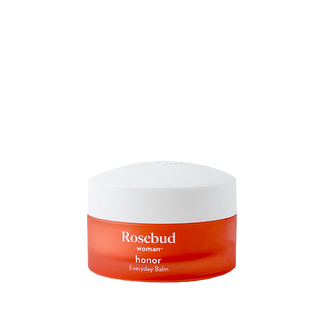
Shop what’s in this story


Frequently asked
Why does the body close down after sexual trauma?
Can you really heal and reopen the body after sexual trauma?
Why does gentle, slow touch feel soothing when other touch feels threatening?
Is it normal for grief to surface when sensation returns to a numb area?
References
- Vaginismus: Causes, Symptoms, Diagnosis & Treatment— Cleveland Clinic
- Polyvagal theory: a journey from physiological observation to neural innervation and clinical insight— PMC / National Library of Medicine






Related Articles