The Most Common Blocks to Desire
What quiets desire, and what restores it
Desire is alive in more women than believe it. Decades of research have converged on a finding that changes everything about how we read a quiet season: for most women, desire is responsive rather than spontaneous.
1. Fatigue and Depletion
The most-cited reason everywhere, and the most misread. A body running on empty hasn't lost her sexuality; she has correctly deprioritized it.
Desire is a surplus phenomenon. It blooms in the energy left over after survival is handled — and for many women, survival is never quite handled. Work, children, aging parents, the household running on her operating system: the body reads all of it as demand, and demand gets first claim on every calorie. The nervous system is doing exactly what it should. The repair begins upstream of the bedroom: rest that actually restores, help that actually arrives, and the radical act of receiving before producing. Down-train before you up-train — soften and replenish the base before asking it for charge. Watch what returns when the tank holds something.
2. Resentment and the Untended Relationship
The unspoken ledger of withholds is truly an anti-aphrodisiac.
Wanting requires openness toward the other, and it's nearly impossible to open toward someone you're keeping score against. Resentment runs quiet and constant, a background application draining the battery, and the body keeps the tally even when the mouth stays gracious. Two doors out. The first is speech: the ledger loses most of its charge when it's read aloud with care, item by item, to the person it concerns — or with a counselor holding the room. The second is release: the exhaustion of wanting a partner to be different than they are will drain a life, and love offered into the gap changes the field faster than any negotiation.
3. The Mental Load
She's willing. There's simply no vacancy. A mind running the grocery list, the calendar, and tomorrow's meeting has no clearing for eros to land in.
Arousal asks for attention, and attention is exactly what the mental load consumes. Brain-imaging work on women's arousal shows the pattern clearly: the analytical, self-monitoring regions quiet down as pleasure rises. A mind that stands watch can't melt. The practices that help are the ones that give the sentry a shift change: a transition ritual between the workday and the evening — a shower taken slowly, ten minutes of breath with the exhale longer than the inhale, music and a locked door. Externalize the lists onto paper so the mind stops rehearsing them. And bring the attention below the neck deliberately: warmth, weight, breath moving the belly.
4. Body Shame and Self-Surveillance
Watching herself from the ceiling instead of feeling herself from the inside — attention spent on how the belly looks is attention unavailable for sensation.
Researchers call it spectatoring: consciousness leaves the body mid-touch and takes a seat in the audience, auditing angles and lighting. Sensation needs a resident, and the resident has stepped out. The repair is a homecoming of attention, practiced in low-stakes moments first — lotion applied to the whole body as felt experience rather than maintenance, a hand resting on the belly with one question: what do I actually feel here? Self-touch as acquaintance, then as blessing. Women describe the shift as moving from being seen to being inhabited.
5. The Hormonal Transition
Menopause quiets the tissue and retires the hormonal push. Many women were assured this meant desire was gone, when so much of the story is circulation.
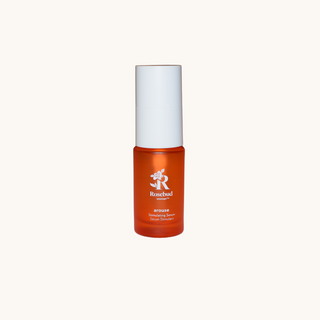
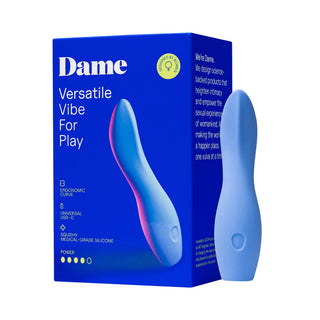
Estrogen's departure changes blood flow, and blood flow is sensation's supply line: less of it means dryness, thinner tissue, and a slower, fainter response. The encouraging part of the physiology is how much of it answers to practice. Movement that floods the pelvis — squats, hip circles, pelvic pulses — restores what youth once did automatically, and regular arousal itself is circulatory exercise: the more the tissue is invited to respond, the more readily it responds. This is precisely where our Arouse Stimulating Serum was designed to serve, awakening circulation and sensation right where the quiet settled in, and where a well-made personal device — we love the thoughtfully engineered ones from Dame — becomes a genuine wellness instrument rather than an accessory. Desire after the transition is cultivated rather than automatic. Cultivated is a door, and it opens with use.
6. Pain, or the Memory of Pain
After enough painful experiences, the body vetoes before the mind votes — a protective no that fires below awareness.
Pain with intimacy is common, real, and deserving of actual care. A pelvic-floor physical therapist or a clinician versed in sexual medicine can change everything. And even after the physical cause resolves, the body remembers: anticipation of pain suppresses desire as effectively as pain itself, because the deep brain has one job and it is protection. Rebuilding happens the way all trust is rebuilt — slowly, with consent granted moment to moment, beginning far from the site of the injury. Comfort helps mechanically too: generous lubrication, unhurried arousal before any approach, and warm-up that treats the whole body as the territory. The veto lifts when the body accumulates new evidence. Give it new evidence gently, and give it time.
7. Flattened Mood, and the Medicines That Flatten It
Depression and anxiety mute desire directly — and the medications treating them often finish the job.
This is among the most under-discussed causes in the whole literature, and the silence does damage: women assume the deadness is theirs when much of it is pharmacological. SSRIs in particular commonly lower libido and mute orgasm — a documented, dose-related effect, and emphatically a conversation to have with your prescriber rather than a reason to stop on your own, since options exist: timing adjustments, dose changes, different medications with lighter sexual side effects. The depression itself matters just as much; desire returns as vitality returns, and treating the whole mood is part of treating the whole woman. If your inner life has gone flat and your sexuality flattened with it, you are describing one phenomenon, and it has answers. Bring it to the appointment. Say it plainly. You are owed a body that feels.
8. Numbness and Disconnection
Trauma held in the tissue, surgeries that severed more than skin, years of overriding the body's signals until the signal went quiet.
The clinical world calls this dissociation and often stops there. Our work goes further: numbness is severed circuitry, and circuitry can be deliberately rewoven. The pelvis is a place many women left long ago — after violation, after medical events, after decades of the body being used for everyone else's purposes — and it receives its resident back with astonishing willingness. The reweaving is concrete: breath directed into the pelvic bowl, gentle self-touch that maps sensation without any demand for pleasure, sound freeing the throat so the lower gates can follow, scars met like frightened parts of oneself — touched, spoken to, blessed. For trauma, a somatically trained therapist makes the road safer and shorter. Sensation returns the way feeling returns to a sleeping limb: pins and needles first, then warmth, then the current. The body responds fast once it's asked.
9. Inherited Shame and Conditioning
For some, desire was made dangerous, and wanting trips an alarm installed generations back.
The good-girl programming, the religious overlay, the lineages where pleasure was rationed and the women held no vote: this conditioning arrives pre-installed, running in the background of even the most liberated life. Here is the liberating truth about shame — it is collective, an old frequency moving through the whole line, and there is no such thing as private shame. What one woman speaks aloud in a held circle, every woman in the room recognizes. De-shaming works: speaking the unspeakable to a trusted witness, writing the inherited rules down and reading them as the artifacts they are, choosing consciously which beliefs to keep. And the body learns faster than the mind here. Every experience of pleasure received without punishment is a counter-argument the conditioning can't refute.
Every reason above is a brake — a condition, a context, a veto — and brakes release. The women in our community prove it continually, at every age, including the ones who were promised the door had closed for good. Begin at whichever door is yours.
______
And where the story is circulation and sensation, we made Arouse Stimulating Serum for exactly this threshold, and we keep a considered assortment of personal devices from Dame because reawakening deserves beautiful instruments. The current is not gone. It's banked behind a door, ready the moment you open it.
“Every reason above is a brake — a condition, a context, a veto — and brakes release.”
Shop what’s in this story
Frequently asked
Why have I lost interest in sex?
Is it normal for desire to fade during menopause?
Can antidepressants lower libido?
Can desire come back after years of absence?
References
- Your Sexual Health— American College of Obstetricians and Gynecologists
- Low Libido (Low Sex Drive)— Cleveland Clinic
- Selective Serotonin Reuptake Inhibitors— StatPearls, NCBI Bookshelf
- Sexual Health and Menopause— The Menopause Society
- Pelvic Floor Dysfunction— StatPearls, NCBI Bookshelf






Related Articles