Anorgasmia: Causes & How to Invite More Sensation
On anorgasmia, touch, and the pleasure that's already yours
Pleasure is a wide field, and orgasm is one bright flower in it. We tend to talk as though climax were the entire point of erotic life — the destination that redeems everything leading up to it. Your body knows better. It lives in sensation: the warmth of a hand, blood rising under the skin, the slow bloom of arousal that has its own complete pleasure whether or not it ever crests. If you don't orgasm, or no longer do, you can still be deeply alive to touch. That aliveness is the real subject here.
What anorgasmia actually is
Anorgasmia — clinically, female orgasmic disorder — describes difficulty reaching orgasm, or a marked drop in its frequency or intensity, enough to cause you distress. It's common: as many as one in seven women have never had an orgasm at all, and many more find the ease of it changes across a lifetime. Clinicians describe a few kinds. Some women have never climaxed (lifelong). Some used to and now don't, which often arrives with menopause (acquired). Some reach orgasm in one situation, like their own hand, and not in another, like partnered sex (situational). And some find it absent across the board (generalized). Naming your version matters, because each one points toward a different kind of care. Hold onto this from the start: you can still feel desire, still feel pleasure, still love being touched, with any of these.
Why it happens — and why none of it means you're broken
A body that doesn't climax is usually responding to something real and specific, and once you find what, you can work with it. The reasons tend to gather in a few places.
The chemistry of a stage. As estrogen falls toward and through menopause, blood flow to the clitoris and vaginal tissue slows and sensitivity can dim. This is one of the most common reasons orgasm gets harder with age, and one of the most workable.
Medications doing their job. Antidepressants, especially SSRIs, are well known to mute orgasm for many women. That's the medication working as designed on your nervous system — a conversation to have with your prescriber, and never something to change on your own.
A nervous system still on guard. Stress, anxiety, depression, body shame, and especially a history of sexual trauma can keep the body braced. A guarded body is doing exactly what it learned to do to keep you safe; it needs safety and time to believe the danger has passed. (And paradoxically, watching yourself anxiously during sex — wondering whether it's working — is one of the surest ways to keep it from working.)
A map no one handed you. Plenty of women have simply never been shown how their own pleasure works, or have only ever met the kind of stimulation that doesn't reach them. This is the most common reason of all, and the most fixable.
What an actual orgasm does for the body
Naming this isn't a way to make anyone feel she's missing out. Orgasm is worth wanting for reasons that have nothing to do with performance, and worth gently reaching toward — because a climax is a small physiological event with real benefits.
It lowers stress at the level of your chemistry. Orgasm releases oxytocin, dopamine, and endorphins, which actively counter cortisol — calming the nervous system, easing anxiety, lowering blood pressure. This is the literal mechanism behind the old line that an orgasm a day keeps stress away.
It deepens sleep. Oxytocin and prolactin, with a nudge toward melatonin, relax the body and help you fall asleep faster and rest more deeply.
It relieves pain. Endorphins and oxytocin raise your pain threshold — easing menstrual cramps, headaches and migraines, and the ordinary aches that arrive with age. Brain imaging confirms the threshold genuinely rises at the moment of climax.
It brings blood and nutrients to the pelvis. The circulation and the muscle contractions of orgasm feed the vaginal and pelvic tissue and tone the pelvic floor, supporting the tissue health that keeps comfort and sensation alive — which matters more with age, not less.
It lifts mood and self-regard. The dopamine and oxytocin leave contentment behind them, and women who orgasm regularly report higher self-esteem and more ease in their own skin.
It bonds and softens. Oxytocin is the chemistry of trust and closeness — toward a partner, and toward yourself.
So orgasm is genuinely good medicine. And the body offers this gift most freely when you stop demanding it — which is exactly where the next part begins.
What invites this level of feeling
There's no single fix, and the right path depends on the cause — so an early move is often a good provider who can rule out medical contributors and review your medications. From there, the approaches that help most are gentler than people expect.
Take orgasm off the table. This sounds backwards, and it's the most powerful place to begin. When climax is the goal, the body performs and watches itself, and the watching blocks the very thing you're reaching for. Give yourself full permission to feel without arriving anywhere, and the pressure that's been in the way starts to lift.
Learn your own body, slowly. Guided self-exploration — unhurried, curious touch with no destination — is the single most evidence-backed path to orgasm for women who've never had one, and a beautiful practice regardless of where you land. This is exactly what our free self-pleasure ritual is built for: a slow, pressure-free map back to your own sensation.
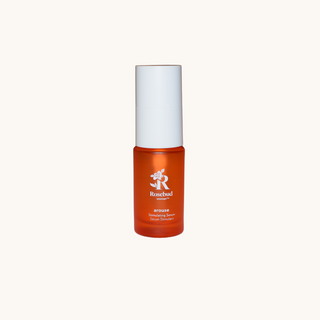
Invite blood flow and sensation. Warmth, a botanical arousal serum like Arouse, a good lubricant, and a well-designed vibrator all bring circulation and stimulation to tissue that may need a clearer, stronger invitation than it once did. For menopause-related changes, ask your provider about low-dose vaginal estrogen, which can restore blood flow, comfort, and sensitivity.
Tend the nervous system. Safety, slowness, and breath that reaches the belly help a guarded body soften. If trauma is part of your story, this work belongs alongside a trauma-informed therapist or a pelvic floor physical therapist, who can help the body relearn trust at its own pace.
Bring in a guide. A certified sex therapist can be transformative, solo or with a partner, especially when the roots are emotional or relational. There's no prize for doing this alone.
Touch is worth it on its own
Here's what the finish-line story leaves out: a life full of pleasure doesn't require orgasm. It requires presence and a body you're willing to inhabit. Orgasm may return, or arrive for the first time, often once the pressure to produce it is gone. And if it doesn't, you are no less whole, no less entitled to a rich erotic life. Start where every good path starts — with your own unhurried hand.
→ Get our free self-pleasure ritual — a slow, no-destination practice for coming home to your own sensation.
Shop what’s in this story
Frequently asked
What is anorgasmia?
Why has orgasm become harder as I get older?
Can antidepressants affect orgasm?
What actually helps invite orgasm?
References
- Anorgasmia: Causes, Symptoms, Diagnosis & Treatment— Cleveland Clinic
- Anorgasmia in women — Symptoms and causes— Mayo Clinic
- Sexual dysfunction associated with selective serotonin reuptake inhibitors in adults with depression: a systematic review and meta-analysis— PMC / National Library of Medicine
- Efficacy of Treatments for Anorgasmia in Premenopausal Women According to Evidence-Based Practice: A Systematic Review— PMC / National Library of Medicine






Related Articles