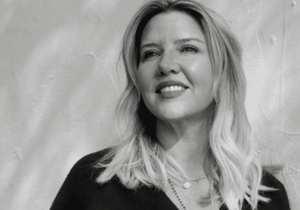
Letters on: Life in a Changing Body
Dear Rosies,
A health intake form came across my desk this week. Someone lovely, coming to a retreat, had filled it out with obvious care. She listed nine medications, some for chronic conditions, and some, I suspect, for the side effects of those. The list told the story of years spent doing her best with a body that had other ideas.
My first response was simple sympathy. What it must take to carry that. How much of that burden is invisible to everyone else. The longer I sat with it, though, the less distant it felt. Because beneath the diagnoses and prescriptions, chronic illness is the experience of a body changing without your permission. Of losing a certain kind of authorship over your physical life.
I don't know that experience as she does. But we've all visited that country.
We've all had weeks when illness shrank life down to getting through the day. And we are mostly women, so we also know what it is to live in a cyclical body, one that never wakes up quite the same. Something is always shifting without asking first.
That sent me looking for what philosophers and contemplative traditions have to say about living in a body that keeps changing.
The two things that get said
The women in this community are, by and large, women who try. You put care into what touches your body. You seek what supports you, as one way of treating the body as worthy of good things.
And yet.
Take menopause. Bring the heat, the three a.m. wakefulness, the word that disappears mid-sentence into the open, and two responses are waiting.
The first is a shrug. Every woman goes through it. Which teaches you to stop mentioning it.
The second sounds more helpful. You wouldn't be struggling so much if you'd optimized properly. If your hormones were dialed in, your cortisol regulated, your sugar gone, your protocol followed.
Susan Sontag dismantled that second way of thinking in Illness as Metaphor, written while she was undergoing chemotherapy. Once we assign personal meaning to a physical condition, she argued, that meaning becomes moral. If your character somehow caused it, then failing to fix it becomes your fault too. Theories that blame disease on mental states, she wrote, are "an index of how much is not understood about a disease."[^1] She was writing about cancer. She could have been writing about much of what gets said to women over forty-five.
Beneath the friendlier response sits a quiet fallacy: that the inputs determine the outcome. If I eat perfectly, buy the nontoxic products, manage my stress, take the supplements, do the practices, I'll be spared.
Psychologists describe the instinct underneath as the just-world hypothesis: our tendency to believe that good choices should lead to good outcomes, and that suffering must have an explanation we can find and prevent.[^2] It's an understandable impulse. It gives us a sense of order in a world that is far less controllable than we would like.
The trouble comes when that instinct turns inward.
The moment your body does something unexpected anyway—as bodies do, because of genetics, viruses, chance, and time—the story turns on you. If good inputs produce good outcomes, then a difficult outcome must mean you failed.
You didn't know enough.
You didn't do enough.
You weren't disciplined enough.
The system can't fail. Only you can. That is guilt wearing the clothes of wellness.
The truth is more complicated. The inputs load the dice. They don't roll them. Lifestyle is one of the biggest levers we have, and a lever is not a guarantee.
Writers worth knowing
This investigation brought me to the work of several writers and researchers:
Stephen Levine drew a distinction our culture rarely makes. Some people are cured but never heal. Others heal deeply even as their illness progresses. Healing, he realized, is not the same as cure. "To heal is to touch with love that which we previously touched with fear."[^3] That doesn't make cure any less precious. We seek it where we can. We pull every lever available. But our wholeness cannot depend on the outcome.
The philosopher Havi Carel, who developed a life-altering lung disease in her thirties, helped me understand why a changing body feels so disorienting. In health, the body is transparent. We look through it at the world. We don't think about breathing until breathing becomes difficult, or walking until a knee refuses to cooperate. Then something changes. The body becomes opaque. It enters consciousness.[^4]
Toni Bernhard offers another insight. There are always two arrows. The first is the thing itself: the sensation, the naming, the facts. The second is everything the mind adds. This shouldn't be happening. Something is wrong with me. I should be handling this better. Behind every stressful thought, she writes, is "the desire for things to be other than they are."[^5]
A changing body changes perception. It reveals what the efficient, healthy body often rushes past. Virginia Woolf noticed this in 1926, wondering what appears "when the lights of health go down, the undiscovered countries that are then disclosed."[^6]
The one who is watching
There is something else to notice, and that is the place from where we are looking, the awareness behind the observation.
You are the one aware of the hot flash. The awareness that notices the hot flash is larger than the hot flash. You are the one aware of the fog, the sleepless night, the ache. The awareness that notices these things stays whole while they come and go.
The body changes. And somehow, there is something in us that knows change is happening without being changed by it.
Classical Tantra offers a different relationship to the body than the one many of us inherit. The body belongs to the sacred reality we are here to experience. Nothing about being human disqualifies us from wholeness.[^7]
The movement asked of us is recognition. Nietzsche gave this a name: amor fati—love of one's fate.[^8] Something closer to meeting this life, this body, as it is, rather than only loving the version we hoped for.
Take the care available to you. Use what supports your body. Seek what helps. And notice where you are still making your peace conditional on how well any of it works.
Love in the changing seasons
We hold one version of the body as the correct one—usually a version from years ago—and read every departure from it as loss. But you have already lived through many bodies. The body that was thirteen. The body that carried you through heartbreak, illness, joy, work, love. The body that brought you here. Each one was whole.
The question of this season is whether you can love the body that is here.
Ways of meeting the body
Awareness. Simply know what is happening while it happens. Noticing rather than analyzing.
Curiosity. Meet sensation as something to be explored. Curiosity is the opposite of verdict.
Inclusion. Let the whole experience belong. The fatigue, the medication, the limitation, the grief. Nothing has to wait outside your life until it improves.
Spaciousness. Feel the ache and also the room around it. The field holding the pain becomes larger.[^9]
The second arrow. Learn to feel the difference between what is happening and the story about what is happening.
Mercy. Bring warmth to the places where you have been bracing. Touch with love what you once touched with fear.
None of these require a good day.
That is the point.
Grieve what needs grieving. The body you had. The ease you didn't know you were carrying until it changed.
But let the grief be part of the whole.
Let the frustration be here. Let the gratitude be here. Let the tenderness be here.
Let the animal body be exactly as it is: changing, vulnerable, alive.
Can you feel the ache and also the space around it?
The fear and also the presence that knows the fear?
The practice is becoming large enough to hold what is here.
The whole beautiful, bewildering animal.
To your most beautiful, valued, sacred embodiment,
Christine
Notes
[^1]: Susan Sontag, Illness as Metaphor — Picador/Macmillan First published in The New York Review of Books, January 1978, while Sontag was undergoing treatment for breast cancer. Her later AIDS and Its Metaphors (1989) extends the same argument to a new epidemic.
[^2]: Melvin J. Lerner, The Belief in a Just World: A Fundamental Delusion Observers who could neither help a suffering woman nor expect her suffering to end rated her character more harshly than any other group, revising her worth downward rather than accepting that the world is not fair.
[^3]: Stephen Levine, Healing into Life and Death — Penguin Random House Levine and his wife Ondrea spent decades accompanying the seriously ill and the dying. He wrote at the height of the "you created your illness" vogue and considered it merciless.
[^4]: Havi Carel, Illness: The Cry of the Flesh — Routledge, 3rd ed. Carel, a philosopher at the University of Bristol, was diagnosed in her thirties with lymphangioleiomyomatosis, a rare progressive lung disease. The transparent/opaque distinction draws on Maurice Merleau-Ponty, Phenomenology of Perception (1945).
[^5]: Toni Bernhard, How to Be Sick — Wisdom Publications The two-arrows image is the Buddha's, from the Sallatha Sutta (Saṃyutta Nikāya 36.6).
[^6]: Virginia Woolf, "On Being Ill." Written in 1925; published by T. S. Eliot in The New Criterion, January 1926, and revised for the Hogarth Press edition of 1930.
[^7]: The five acts of the divine — pañcakṛtya — in the nondual Śaiva traditions of Kashmir include tirodhāna, concealment, alongside emission, maintenance, withdrawal, and grace. See Christopher Wallis translation of the Pratyabhijñāhṛdayam (c. 11th century), on saṅkoca: consciousness contracting itself into apparently limited forms.
[^8]: Friedrich Nietzsche, The Joyous Science (1882), §276, where the phrase first appears, and Ecce Homo (written 1888), where he offers it as his formula for greatness. He distinguished amor fati from endurance — wanting what is given rather than merely bearing it.
[^9]: This practice follows Darlene Cohen, Turning Suffering Inside Out (Shambhala, 2000). A Zen teacher with severe rheumatoid arthritis, Cohen taught that pain held in a large field of awareness is a different experience from pain in a collapsed one.
“The inputs load the dice. They don't roll them. Lifestyle is one of the biggest levers we have, and a lever is not a guarantee.”
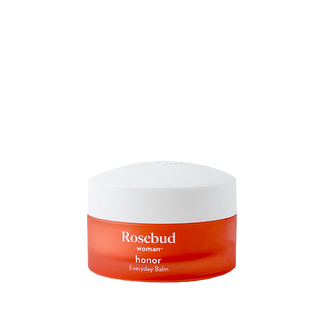
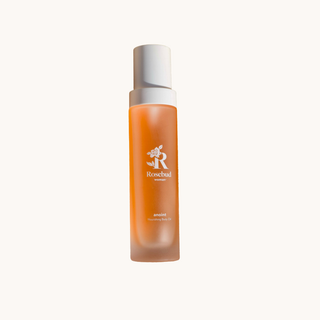
Shop what’s in this story

Frequently asked
What does "healing is not the same as cure" mean?
What is the just-world hypothesis?
What is the "second arrow" in Buddhist teaching?
What does amor fati mean?
References
- Illness as Metaphor (Susan Sontag)— Picador / Macmillan
- Illness: The Cry of the Flesh (Havi Carel)— Routledge
- Healing into Life and Death (Stephen Levine)— Penguin Random House
- How to Be Sick (Toni Bernhard)— Wisdom Publications
- Sallatha Sutta: The Arrow (SN 36.6)— Access to Insight






Related Articles