Why So Many Oils in Honor Every Day Balm? Here's What They Each Do.
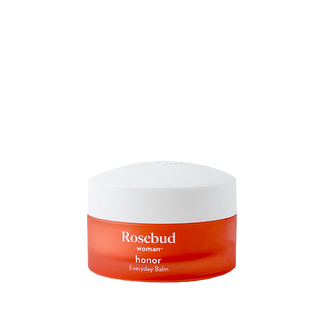
Honor holds its shape in the jar and then melts the instant it meets the warmth of your fingers. That small transformation is beeswax and jojoba doing precisely what they were chosen to do — hold together at room temperature, give way at body temperature, stay where you put them afterward.
Women write to ask why there are so many oils in our formulation. It's a fair question!
Your skin makes several kinds of lipids, for several different reasons, in different places, on different schedules — and they don't decline together or at the same rate. A single oil doesn't do it. Your barrier is built from three classes of lipid: ceramides, cholesterol, and free fatty acids. This balm supports all three.
Jojoba: the one that isn't actually an oil!
Jojoba is the highest volume component in the jar, and calling it an oil is a small inaccuracy that hides the good part.
Jojoba is a liquid wax ester — a different molecular class from every other oil here. And wax esters make up roughly a quarter of human sebum. This is material your skin has been manufacturing for itself your whole life, which is why it settles in the way it does rather than sitting on top like something foreign.
The Sonoran Desert peoples used the seed on skin and wounds for centuries before any laboratory looked at its chemistry and found out why it worked. That sequence repeats through this entire formula, and it's the part I keep relearning: the plants got there first, the women who used them got there first, and the analysis arrived afterward to explain what they already knew.
Jojoba efuses to go rancid. It carries almost no polyunsaturation, so it also protects the more fragile oils sitting beside it.
Grapeseed: The one that feeds the mortar
Grapeseed is here for one molecule.
Grapeseed is around 70 percent linoleic acid — among the richest sources in botanical medicine. Your skin takes linoleic acid and builds ceramides from it, the lipid that organizes the mortar holding your skin's cells in place. Skin running low on linoleate goes flaky and loses water, reliably, and skin supplied with it holds moisture and stays pliable.
This is slow, structural work. Nothing about it announces itself on day one.
Meadowfoam: The one that stays
Meadowfoam is the third largest by volume, and it does something none of the others can.
Its fatty acids run unusually long — C20 to C22 chains that almost nothing else in nature produces — and they form a film that resists rubbing off. Intimate tissue lives under clothing and moves all day. An oil that migrates within the hour has stopped working before it mattered.
Meadowfoam is also close to indestructible against oxidation, so it quietly extends the life of everything else in the jar.
Evening Primrose: The one that calms
Evening primrose earned its place with a fatty acid most plants simply don't make.
Gamma-linolenic acid appears in meaningful quantity in only a handful of botanicals. Your body converts it along a pathway that produces anti-inflammatory signals — which matters enormously for tissue that spends a lot of its life irritated. Postpartum tissue. Menopausal tissue. Skin recovering from treatment or friction or a long stretch of dryness.
Bisabolol, the chamomile-derived molecule further down the list, works the same territory from a different angle, and at a dose that genuinely does something rather than decorating an ingredient list.
Beeswax: The one with the longest memory
Beeswax is just over 11 percent, and it's the reason Honor is a balm at all.
It supplies structure and persistence — the film that holds through the day, the body that keeps the oils from running. Remove it and you'd have something that spreads beautifully and disappears by lunch.
It also carries the longest lineage here. Beeswax is among the oldest skin preparations in human history, worked by hand in Egypt and Greece and every medieval European kitchen where a woman kept a salve for her family. That thread runs unbroken to this jar.
It also means Honor is Beegan. The bees, the plants, and the women who worked with both.
The ones already the right size
Then there are the small things, and they're doing more than their percentages suggest.
Honor supplies free fatty acids directly — linoleic, palmitic, oleic, stearic — rather than waiting for your skin's enzymes to cleave them out of larger oils. They arrive already sized to cross into the skin, between 256 and 285 Daltons, comfortably under the roughly 500-Dalton limit your skin barrier enforces. Alongside them sit plant sterols standing in for cholesterol.
Your barrier is built from three classes of lipid: ceramides, cholesterol, and free fatty acids. Two of them are handed over ready to use. The third is fed.
That's the actual design. Not a blend of pleasant oils — a resupply of the specific materials this tissue stops making enough of when estrogen steps back.
About coconut oil
Women reach for coconut oil, and I understand exactly why. It's in the kitchen, it's inexpensive, it smells like something wholesome.
It's also the wrong tool for this particular tissue. Coconut oil carries almost no linoleic acid, so it can't feed the ceramide pathway at all. And its antimicrobial activity works against you here — the vagina is a self-cleaning ecosystem with its own bacterial balance, and some women find coconut oil sets off yeast overgrowth. Wonderful on your elbows. A gamble where it counts most.
What to do with it
Warm a small amount between your fingertips until it melts, then take it slowly over the outer folds and creases — the labia, the perineum, wherever the skin feels thin or tight or tender. Morning and night.
Give it weeks. Structural work moves at the speed of skin turnover, so the comfort accumulates rather than arriving. Women generally notice around the third or fourth week, and a jar lasts about ninety days at daily use.
Burning, pain, or dryness that a daily balm doesn't reach deserves a provider who knows menopausal and vulvar medicine. A great deal of what happens here answers well to treatment, and a balm is one instrument in a larger kit.
“Safe and effective — and worth starting in perimenopause, sooner rather than later.”
Shop what’s in this story
Frequently asked
Why does Honor use so many different oils?
Is Honor safe for vaginal dryness in menopause?
References
- Fearless Menopause: An Interview with Dr. Barb DePree— The Rose Woman Podcast
- Addressing Vulvovaginal Atrophy (VVA)/Genitourinary Syndrome of Menopause (GSM)— National Library of Medicine (PMC)
- Sexual Health— The Menopause Society






Related Articles