


Episode #102: How are we related: Ecology, Consciousness and Enchantment with Tam Hunt
Today’s guest is Tam Hunt, a lawyer by day, writer, and scholar by night. He works in green energy policy and is also an Affiliate Guest in Psychology in the META Lab at UCSB, where he studies consciousness. He is developing on a General Resonance Theory of consciousness, which is slowly gaining notoriety in academic and popular circles.
We discuss philosophy, consciousness, and how it resonates and relates to us in our daily lives.
In this episode, we cover:
- How are philosophy, nature of consciousness, and environmentalism related?
- Animanism and Panpsychism
- Eco, Ego, Eros: Essays in Philosophy, Spirituality, and Science
- Hawaii and Tropical Worldviews
- Hopi Worldview and shifting languages structures
- Process philosophy
- Application of the worldviews discussed
- Thoughts on the emergence of Artificial Intelligence
Helpful Links:
- Tam Hunt - Lawyer by day and writer and scholar by night. Follow him on Facebook for updates on his new book
- Chopin - Etude Op. 25 No. 11 in A Minor (Winter Wind)
- The Mind's I: Fantasies And Reflections On Self & Soul by Daniel Dennett and Douglas R. Hofstadter
- Gödel, Escher, Bach: an Eternal Golden Braid by Douglas R. Hofstadter
- Charles Eisenstein
- The Culture of Counter-Culture: Edited Transcripts by Alan Watts
- Eco, Ego, Eros: Essays in Philosophy, Spirituality and Science by Tam Hunt
- Language, Thought, and Reality: Selected Writings of Benjamin Lee Whorf
- Shapeshifters: A History by John B. Kachuba
- Sundari Writers Day: Writing from the Body with Christine Marie Mason and Tam Hunt
Find Rosebud Woman on Instagram as @rosebudwoman, Christine on Instagram as @the.rose.woman, and on Tiktok as @therosewoman108.
“All things in our universe are constantly in motion, vibrating.”
Shop what’s in this story
Frequently asked
What is panpsychism?
Panpsychism is the view that mentality is fundamental and ubiquitous in the natural world — that consciousness does not switch on late in evolution but is present, in some minimal form, all the way down. It has a long philosophical history and is treated as a serious position in contemporary philosophy of mind, often described as a middle path between dualism and physicalism. Tam Hunt's work with Jonathan Schooler is one of its current research programs.
What is the difference between animism and panpsychism?
They point at a similar intuition from different directions. Animism is the lived, cultural stance that the world is populated by beings with their own interiority — rivers, mountains, forests, animals — and it usually carries obligations of relationship and reciprocity. Panpsychism is the philosophical claim that mind or experience is a fundamental feature of matter. One is a way of living in relation to a conscious world; the other is an argument about what the world is made of.
What is process philosophy?
Process philosophy holds that reality is made of events and becoming rather than of static things — that a river, a body, or a self is better understood as an ongoing process than as an object that happens to change. Alfred North Whitehead's philosophy of organism is its most developed framework, and it runs underneath much of the panpsychist thinking in this conversation.
How does language shape the way we perceive nature?
This is the thread the episode picks up through Benjamin Lee Whorf's study of Hopi, which encodes time, process and relationship differently than English does. The argument is that a language built on nouns and possession inclines its speakers to see a world of separate objects, while a language built on process inclines them to see relationship and flow. Change the grammar and the world you notice changes with it.
References
- Listen: Episode #102 with Tam Hunt— The Rose Woman Podcast
- Panpsychism— Stanford Encyclopedia of Philosophy
- Process Philosophy— Stanford Encyclopedia of Philosophy
- The Easy Part of the Hard Problem: A Resonance Theory of Consciousness— Hunt & Schooler, Frontiers in Human Neuroscience (2019)
- Language, Thought, and Reality: Selected Writings of Benjamin Lee Whorf— MIT Press






Related Articles


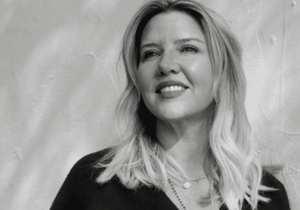
Christine Mason
Founder & Author, Rosebud Woman
Christine Marie Mason is the founder and CEO of Rosebud Woman, a leading brand in women’s intimate wellness and self-care. She is the author of six books on embodiment, intimacy, and awakening, and the host of The Rose Woman podcast—ranked in the top 5% worldwide. A longtime yoga and consciousness teacher, Christine writes and speaks on women’s health, sexuality, and midlife vitality, helping people cultivate love, reverence, and radiant wellbeing in every stage of life.