Kava for Relaxation: Benefits, Safety & How to Use
Kava has been part of Pacific Island life for thousands of years — shared from a communal bowl at the end of the day as a ritual of settling and connection. Today it's one of the most sought-after botanicals for people who want to unwind without reaching for alcohol or a pharmaceutical. Here's what kava actually is, what the research does and doesn't show, how to use it thoughtfully, and the safety cautions that genuinely matter.
What Is Kava?
Kava (Piper methysticum) is a plant in the pepper family native to the South Pacific. Its roots are traditionally prepared as a drink that Pacific Islanders have used for thousands of years for ceremonial and medicinal purposes. The active compounds — called kavalactones — are responsible for kava's characteristic calming, grounding feeling.
Why People Reach for Kava
Kava is most often used to take the edge off everyday stress and tension — a way to shift from a keyed-up state into something softer. Unlike alcohol, it isn't intoxicating for most people; the traditional description is of a clear head and a relaxed body.
The research is measured, and it's worth being honest about it. There has been a fair amount of research on the use of kava for anxiety, and the U.S. National Center for Complementary and Integrative Health (NCCIH) notes that kava supplements may be helpful for anxiety but may need to be taken for several weeks to produce an effect. Notably, kava does not appear to help with generalized anxiety disorder, and evidence for other uses is limited. In plain terms: kava is a gentle botanical for ordinary tension — not a treatment for a diagnosed condition.
Kava and Sleep
Kava isn't a sedative in the way a sleeping pill is, and it hasn't been well studied specifically for insomnia. But because it can ease the mental tension that so often keeps us awake, many people find it a welcome part of a wind-down ritual — something to help the body downshift in the last ninety minutes of the day. If sleep is your main concern, it's worth reading our guide to sleep changes and considering magnesium and other botanicals alongside it.
How to Use Kava
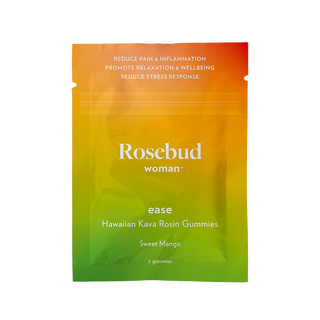
Traditionally kava is prepared as a root drink with an earthy, acquired taste. Modern formats make it far easier to fold into an evening routine. Our own Ease: Hawaiian Kava Gummies use organic Hawaiian kava (Piper methysticum) in a measured gummy — a simple, low-fuss way to enjoy kava's calming ritual without brewing a bowl.
- Start low. Use the smallest serving first to see how kava feels for you.
- Make it a ritual, not a rescue. Kava suits a consistent wind-down more than a one-off fix.
- Give it time. The effects are gentle, and for tension they may build with regular use.
- Never combine it with alcohol (see below).
Safety First
Kava is generally well tolerated when used sensibly, but there are real cautions worth taking seriously.
- Liver health. Kava products have been linked to rare cases of liver injury, some of which have been serious or even fatal, according to the NCCIH. If you have any liver condition, or take medications that affect the liver, talk to your doctor before using kava.
- Don't mix with alcohol or sedatives. Kava should not be used together with other substances that have sedative effects, such as benzodiazepines or alcohol.
- Pregnancy and breastfeeding. Kava may pose special risks during pregnancy or while breastfeeding — avoid it in these times.
- Everyday side effects. Kava can cause digestive upset, headache, or dizziness in some people. Long-term, high-dose use has been associated with dry, scaly skin.
- Talk to your clinician. If you take any prescription medication or have a health condition, check with a healthcare provider before adding kava.
The Bottom Line
Kava is a time-honored botanical for softening everyday stress and marking the end of the day — best treated as a gentle ritual, used in moderation, and kept well away from alcohol. Used thoughtfully, it's a lovely, hormone-free way to help your nervous system settle.
Explore more calming botanicals and evening essentials in our Sleep collection, or keep reading with Your Nervous System and Anxiety and Menopause.
Sources & Further Reading
- Kava — National Center for Complementary and Integrative Health (NIH)
- Sleep and Menopause
- Your Nervous System and Intimacy
Shop what’s in this story
Frequently asked
Does kava actually help with anxiety?
Is kava safe for your liver?
Can I take kava to help me sleep?
How should I start using kava?