Menopause Is a Marital Topic
A woman we know told us that she raised the topic of menopause with her husband over dinner, told him that her body was running hotter at night and drier, and to let him know that she intended to enjoy the next thirty years of their marriage anyway, to make adjustments to their sexual and sensual connection, and would he like to talk about it. She reports that he put down his fork and admitted his own engine had been idling differently for a year, and that he'd been quietly afraid it meant something about them. It didn't. It meant they were both in midlife, and neither one had said so out loud.
Midlife hormonal change — hers and his — belongs in the marriage, spoken. Menopause is a marital topic. So is andropause. Two bodies are renegotiating themselves into a new stage of life, and it comes with many questions of identity, and when neither renegotiation gets named, each partner may read the other's changes as a message about love.
Because that is what desire is for so many of us: the language love speaks. Arousal is how connection announces itself in the body. Reaching for each other is how a long marriage says still you, still yes. So when arousal slows — hers taking longer to warm, his less insistent than it was at forty — the frustration is rarely about the mechanics. It's the fear underneath: does the quiet mean the love is quieting? Two people can lie in the same bed constructing entirely different stories from the same silence. She decides he's stopped wanting her. He decides she's relieved to be done with it. Neither story is true, but both grow teeth in the dark.
The identity shifts run just as deep. She is asking who she is when the body that carried her fertility becomes something new. He is asking who he is when drive — the thing his whole self-concept may have leaned on — softens. These are real griefs and real openings, and they land at the same time, in the same house. A marriage can carry that weight beautifully, but only a spoken weight can be carried together. The unspoken version gets carried alone, twice.
And I know who some of you are, reading this. Many of the orders that come through our shop are placed by men — husbands and partners who noticed something, read something, and decided to show up for it. If that's you: welcome, and thank you. You are already doing the thing this essay is asking for. You don't have to arrive with answers, and please don't arrive with a fix — her body is hers to author, and yours is yours. Arrive with a sentence. I've been reading about what midlife does to both of us, and I want us to talk about it. That sentence, spoken first by the man, is worth a hundred anniversaries. It tells her the silence was never a verdict.
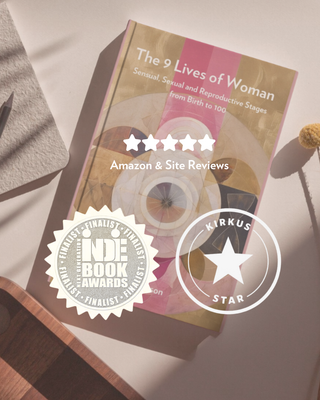
If you want something to actually be reading, I wrote The Nine Lives of Woman for exactly this. It maps the whole arc of a woman's life, menarche to menopause and beyond — what each passage asks of her body and her identity, and what it opens. I expected women to buy it for each other. Instead, some of the most moving letters I receive are from men: husbands who read it to understand the woman across the table, fathers reading ahead for their daughters. A man who reads her passages before she has to explain them is offering a rare kind of love — the kind that does its homework.
We also did a podcast episode on andropause a while ago, with Brian Clement, that you might enjoy, putting the male experience and concerns into perspective.
What I keep relearning is that the conversation is the intimacy. Women have always brought each other through this passage — mothers, aunts, the herbal knowing traded at kitchen tables. We remember that lineage every time we speak the body's truth out loud. Bringing a partner into the circle widens it. And the conversation has a shape: each of you says what is changing in your body, and together you decide what you want desire to look like in this next era — because midlife doesn't end wanting, it rewrites the grammar, and neither of you can honor terms the other has never heard.
Slower, it turns out, can be an invitation. Arousal that takes twenty minutes instead of two asks for exactly what long marriages are rich in: time, attention, familiarity deep enough to be unhurried. Couples who talk their way through this passage often report the sex that follows is less frequent and more felt. The frustration was never proof the desire had died. It was proof the desire still mattered.
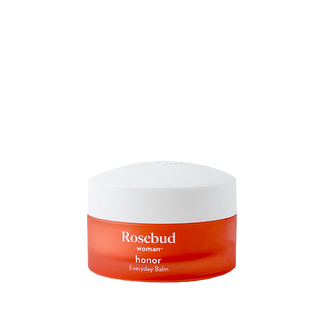
Now let it land where the change lives: in the skin. The vulva is thin, responsive tissue, and as estrogen recedes it holds less moisture on its own. Dryness is where desire most often turns to frustration — when touch that used to feel like welcome starts to feel like friction, the body flinches before the heart can answer, and one flinch misread is a week of distance. Tending the tissue keeps the door open. This is the work Honor, our Everyday Balm, was made for: a botanical intimate moisturizer applied daily to the outer tissue — the labia, the entrance, anywhere tight or tender — the way you'd tend the skin of your face. A minute, morning or night. Some women keep it private ritual; some teach their partner the gesture, and the teaching becomes its own conversation. And yes — Honor arrives in a marriage as a gift more often than you'd guess. A man who places a jar on the nightstand isn't solving anything. He's saying I see this season, and I'm in it with you. Comfortable tissue doesn't create desire. It clears the path so desire can travel.
If symptoms persist for either of you — pain, sleep loss, mood that won't lift — bring a provider into the conversation as well. Reverence includes knowing when a balm is the right tool and when the moment asks for medicine, or for a good couples therapist. Those referrals are acts of love too.
May our marriages get franker, then warmer, and stay loving, generous and compassionate all the way through.
“The frustration was never proof the desire had died. It was proof the desire still mattered.”
Shop what’s in this story
Frequently asked
How do I talk to my partner about menopause?
What is andropause?
Does menopause mean the end of desire in a marriage?
What helps with vaginal dryness during menopause?
References
- Couples' Sexual Communication and Dimensions of Sexual Function: A Meta-Analysis— Mallory, Stanton & Handy, Journal of Sex Research (2019)
- Sexual Health and Menopause— The Menopause Society
- Low Testosterone (Low T): Hypogonadism, Symptoms & Treatment— Cleveland Clinic
- Low Libido (Low Sex Drive)— Cleveland Clinic






Related Articles