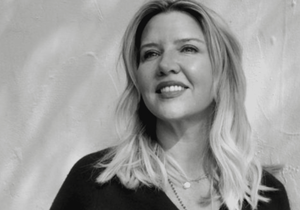
#193: Making Friends with Fear with Dr. Todd Burstain
When your authentic voice speaks in the same room as fear, you get to choose.
Christine opens this episode with a teaching about the younger part of us that once got hurt and decided it would never happen again. That protector is loyal and means well. It holds the past up as a lens on the present and tries to predict the future, and when it runs the whole house, the house becomes very small. In the traditions Christine studies, fear begins in an original bargain, when a child learns that being wrong might mean love pulls away, and the nervous system ties belonging to survival. She reads Patañjali's second sutra, yogaś citta-vṛtti-nirodhaḥ, as the capacity to direct the mind's fluctuations and choose where attention rests. That skill, dhāraṇā, lives in the returning. Each time you come back, your nervous system learns again that you have a choice.
Dr. Todd Burstain spent three decades in medicine. As an internist he asked why a patient's symptoms flared and why some stopped responding to treatment, and he kept finding fear underneath. As a Chief Medical Information Officer at UW Medicine and Ochsner Health, he brought new computer systems to physicians, and some of his colleagues retired rather than learn one. Fear colored his family life as well, through 38 years of marriage and four sons, and he gathered what he learned into his new book, Fear Itself: Learning to See Yourself Through New Eyes.
Todd defines fear wide. He means the brain's threat detection system, which learns from abandonment, rejection, betrayal and failure, and builds strategies to keep us from that pain again. Fear rarely announces itself. It wears masks. Anxiety promises that worry will protect you. Depression replays every past mistake so you never repeat it. Codependency says you will be okay once you make sure everyone else is, and control tries to manage everyone in the room. Each strategy arms itself with tools such as rumination, self-criticism, guilt and catastrophizing, and each tool shows you the benefit while it hides the cost, a life made smaller than it could be.
Christine asks him to walk one wound all the way through, and he chooses neglect. Its core fear says that when I need someone, no one will come, and the child concludes she doesn't matter. From there the coping splits into two camps. The anxious child becomes perfect, so valuable that no one can overlook her. The avoidant child withdraws behind emotional walls, or takes control of everyone around her. Most of us mix strategies, and Todd sees no clean predictor of which camp a child will choose. A child raised among avoiders may rebel into anxiety.
Todd explains why fear holds the default position. Under threat, he says, the prefrontal cortex goes offline while the amygdala goes into overdrive, grabbing the nearest painful memory as its answer whether or not it fits. He traces fear's effect on five brain chemicals. It lowers dopamine, which carries motivation and hope, along with endorphins, which ease pain, serotonin, which lets us feel content in what we achieve, and oxytocin, which bonds us to one another. It raises neuropeptide Y, which he calls the craving hormone. Each shift feeds the loop, because cravings erode the sense of control and a body out of control feels unsafe. Christine adds shame to the loop, and Todd agrees: with serotonin low, a person moves from "I had a problem" to "I am the problem." The hope lives in neuroplasticity. A few weeks of practice becomes a habit, a few months of habit becomes a belief, and the belief becomes who you are.
The book's path back to the authentic self has ten steps. The first five quiet the storm. The pause clears the chemistry with breathwork or yoga, until the parasympathetic nervous system regains its strength. Comfort tells the brain it is safe, with a warm blanket, a hug, tapping or a visualization. Focus surprised Todd most. For years his wife told him to meditate and he couldn't see the point, until he realized the skill lies in the refocusing, in coming back each time attention drifts. Observation reads the actual text message, its sender and its setting, before old memory writes the meaning. Curiosity asks what else it could mean, and fear, which wants one answer right now, loosens its grip. Christine remembers a vipassana retreat where she sat in silence, losing her mind a little, until it struck her that she was warm and fed on a cushion in a quiet room, and every problem lived in her head.
The next five steps help the change hold. Acceptance makes room for "I don't know," and for meanings that stay hard. Commitment means choosing these practices each morning against the brain's default. Resilience expects the stumble and starts again at the pause. Connecting to others brings comfort and fresh eyes, and Todd points to a large body of research on how standing in someone else's corner strengthens us too. Connecting to self names the destination, a choice made entirely from the inside. Christine loves how thin that slice can be, down to who you want to be in this conflict or at your son's playoff game next week. "I'd actually like to be a loving, respectful person," she says. "I'd like to be that right now."
One instruction in the book's guided imagery caught Christine's attention: picture a place where you feel safe. Todd explains that happiness feels temporary, and fear knows how to turn it around. Safety is fear's opposite and its whole purpose, so when fear meets it, fear has nowhere left to go. Christine hears Ramana Maharshi's inquiry in it, "Who is having this thought?" From safety, Todd says, joy grows as you move toward the self you chose and feel the contentment of arriving.
As a grandfather, Todd sees emotional regulation as the gift to give children. A small child can't regulate a big feeling alone, so a parent says, you're having a big feeling right now, and we're going to work through it together. He thinks of the nanny in The Help telling the little girl she is kind and she is important. Christine adds that life will bring hard things all the time, and a child who can meet someone's eyes and co-regulate can feel her fear and let it move through her.
In his own practice, the power of the pause surprised Todd, and so did the joy of curiosity, the chuckle when a seventeenth explanation turns up. He retired a few months ago and now keeps a weekly grandparents' day with the two granddaughters who live near him in Seattle. Christine closes the episode with the practice. Take a big breath and let the exhale run longer than the inhale. Wrap your arms around yourself and give a little squeeze. Look around and notice what is actually here: for Christine, perfume bottles, a painting of a lotus, a rug in dusty blue and gold, the fan turning overhead. Then feel the sensation in your body, and let it hear that you are safe in this moment.
In this episode
- (00:00:00) Introduction
- (00:04:48) Why Dr. Burstain wrote about fear
- (00:08:20) How fear uses past experiences to anticipate danger and shape responses such as anxiety, people-pleasing, withdrawal and control
- (00:13:37) How neglect can shape coping strategies
- (00:17:14) How fear keeps patterns going
- (00:20:17) How fear can affect brain chemistry and make it harder to think flexibly
- (00:22:25) The first five steps toward change: pause, comfort, focus, observation and curiosity
- (00:27:26) The remaining steps: acceptance, commitment, resilience, connecting with others and connecting with yourself
- (00:34:02) Making room for choice
- (00:35:25) Fear's effects on the body
- (00:41:40) Imagining safety and finding joy
- (00:44:54) Helping children with big feelings
- (00:49:20) Personal reflections on the process
- (00:52:05) Breathing practices that calm the body
- (00:53:08) Retirement and family life
About Dr. Todd Burstain
Dr. Todd Burstain, MD, is a physician, researcher, healthcare leader and author with more than three decades of experience in medicine. He served as Chief Medical Information Officer at UW Medicine and Ochsner Health, and he has led large-scale research using one of the nation's largest clinical datasets. His book Fear Itself: Learning to See Yourself Through New Eyes draws on neuroscience, psychology and clinical experience. It introduces eight fear-driven identities and a ten-step process for seeing yourself differently. You can read or listen to the first chapter on his website, and he welcomes notes from readers by email.
Links






Related Articles