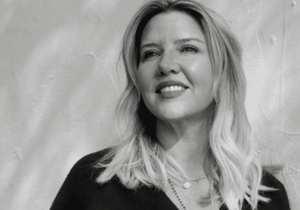
#190: Love Is the Physics: Tam Hunt on Resonance, the ʻĀina, and the AI Reckoning
A philosopher of consciousness comes back from the campaign trail with a theory of everything — and a memoir that proves the commune had it right.
The last time Tam Hunt sat down with Christine, they coined a theory together on air: tropical panpsychism, the observation that consciousness-in-all-things is easiest to feel in a land that meets the body as kin. That theory is now Chapter Five of his new book, The Hippies Were Right! About Consciousness and Everything Else — a memoir-meets-philosophy romp from a commune childhood through the Army, twenty-five years of renewable energy law, and a return to the wisdom he was raised inside. This week he comes back to the show, fresh from his first run for the Hawaii State House.
Tam is a philosopher of mind affiliated with Jonathan Schooler's lab at UC Santa Barbara, where together they developed general resonance theory: all things vibrate; all things carry some iota of awareness; and when vibrating things come near each other they fall into sync, combining simpler consciousness into richer consciousness. In Whitehead's phrase, quoted throughout this episode — the many become one, and are increased by one. Fireflies flashing together in a mangrove swamp, pacemaker cells cohering into a heartbeat, neurons synchronizing into a self: one principle, every scale.
The conversation opens on the campaign trail. Tam ran in Puna as the resilience candidate — local food, local power, nothing over $99 from anyone — and he speaks with unusual candor about what running asks of an authentic person: the salesman's mode, the projections of strangers, the machinery of incumbency in a one-party state. Out of his loss, he and Christine build something in real time: a resonance model of politics, where a campaign catches like a movement catches — by achieving shared frequency with the people it serves, the way a well-timed push raises a child's swing.
From politics the conversation drops into ontology. Tam makes the case that love is what reality is made of — the human feeling as evidence of the fundamental, a recognition that arrived for him viscerally in a ceremonial entheogenic journey and philosophically through Whitehead, Griffin, and decades of study. The same recognition grounds his twenty-five years of climate and energy law: the ʻāina, the land that provides, is conscious and kin, and a conscious world deserves reverence rather than extraction.
Then the episode holds its most honest tension. Tam argues for dramatically slowing the AI buildout — the energy being added this year to feed data centers, he calculates, is like adding a whole new planet of people. Christine answers with testimony from inside: a company able to grow again, and a first-time author — a formerly incarcerated man she met driving an Uber — whose memoir went from manuscript to published book in twenty minutes for zero dollars, and who is now speaking to prison reform groups. Neither position dissolves the other. They hold both, out loud, which may be the whole practice.
The hour closes with the uncounted feminine — how Tam's mother's justified umbrage rewrote his book, and how the record of women's work, because it arrives as labor rather than as idea, keeps falling out of history — and with a teaching Christine carries from her own teacher's lineage: beauty, magic, and enchantment arise only from a coherent interior. The work of clearing decongests the places that warp us, so that what we create together carries abundance.
In this episode:
- (0:01) What losing a state House race teaches — incumbency, the one-party machine, and running on $99 donations
- (5:38) The authenticity problem: every candidate becomes a salesman
- (10:27) Inventing the resonance model of politics, live
- (14:38) How a million-view Scientific American essay became a memoir
- (16:56) The century consciousness was forbidden — behaviorism, and the renaissance now underway
- (18:38) Where "good vibes" actually came from: Beach Boys, Esalen, the tantric texts, the radio age
- (20:49) General resonance theory in three moves — and Whitehead's "the many become one"
- (25:34) Love as ontology: the ceremony that made it visceral
- (28:30) The ʻāina, the deeper green, and Hawaii's 95% fossil fuel dependence
- (34:01) Christine's confession: a company rewired on AI — and the ethics of the trade
- (40:30) Tam's case for slowing down: a new planet of people every year
- (42:39) The book his mother rewrote: honoring the uncounted feminine
- (45:21) Back to the land, for real — food forests, shared labor, and the softened invitation
- (49:09) Three takeaways: it's all love, it's all consciousness, and we have changes to make
- (51:11) Creating from coherence: why beauty can't come from a warped interior
About Tam Hunt
Tamlyn (Tam) Hunt is a philosopher of consciousness and a renewable energy policy lawyer of twenty-five years, affiliated with Jonathan Schooler's lab at UC Santa Barbara. His 2018 Scientific American essay "The Hippies Were Right: It's All About Vibrations, Man!" reached a million readers and grew into his new book. He is the founder of the Big Island nonprofit Think BIG Hawaii, a longtime board member of the Hawaii EV Association, a US Army veteran, and a 2026 candidate for the Hawaii House of Representatives. He lives on a three-acre homestead in Puna, where he is planting a food forest and building a small eco-village retreat.
Resources & links
The Hippies Were Right! About Consciousness and Everything Else — Tam Hunt (Imprint Academic)
"The Hippies Were Right: It's All About Vibrations, Man!" — Scientific American, December 2018
Prior Rose Woman episode with Tam Hunt (panpsychism, tropical worldviews, Eco Ego Eros)
Steven Strogatz, Sync: How Order Emerges from Chaos in the Universe, Nature, and Daily Life
Alfred North Whitehead, Process and Reality (Free Press corrected edition)
Fritjof Capra, The Tao of Physics (50th anniversary edition)
This episode includes candid discussion of a ceremonial psychedelic experience, brief reference to pandemic-era policy debates, a short account of a formerly incarcerated author's difficult early life, and occasional strong language.
“The many become one, and are increased by one.”
Shop what’s in this story
Frequently asked
What is general resonance theory?
What is panpsychism?
What is tropical panpsychism?
Where does this episode land on AI?
References
- Listen: #190 with Tam Hunt— The Rose Woman Podcast
- The Easy Part of the Hard Problem: A Resonance Theory of Consciousness— Hunt & Schooler, Frontiers in Human Neuroscience (2019)
- The Hippies Were Right: It's All about Vibrations, Man!— Scientific American (2018)
- The Hippies Were Right! About Consciousness and Everything Else— Tam Hunt, Imprint Academic






Related Articles