The Ovary's Second Act
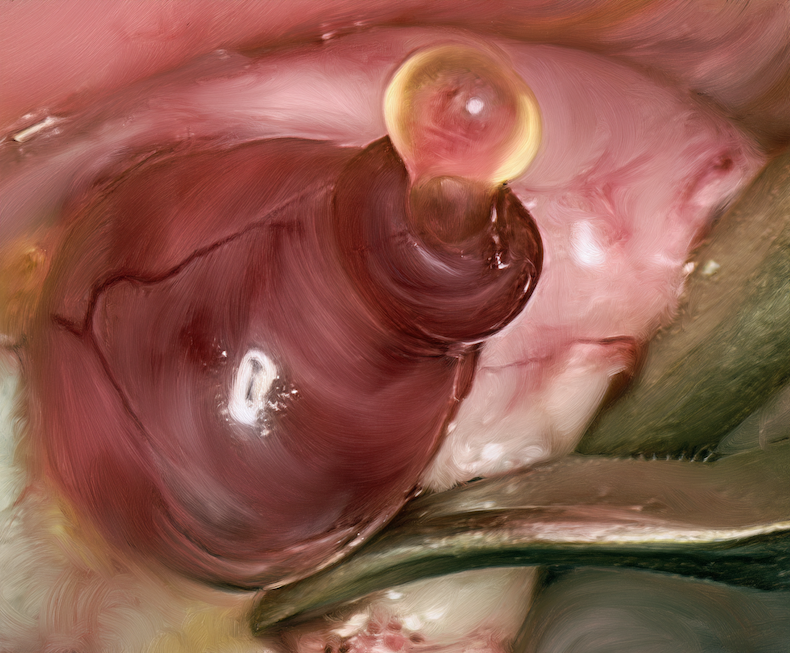
From Nature Magazine: "A human egg is caught on camera as it emerges from a woman's ovary. It is one in a series of the clearest ever images of the ovulation process and was accidentally snapped by surgeon Jacques Donnez, of the Catholic University of Louvain in Brussels, as he performed a hysterectomy. The yellowish egg is seen exiting a red, fluid-filled follicle on the surface of the 45-year-old woman's ovary. Ovulation took a full 15 minutes, much slower than the sudden 'explosive' process suggested by some theories."
Dear Rosies,
Picture the ovaries at midlife, two almond-sized organs that spent decades ripening eggs and setting the rhythm of your cycles. The usual story says they fall silent after the last period. New research from Northwestern University and the Buck Institute shows them taking up new work, more like a career change than a retirement.
In women
A study published this week in Aging Cell, led by reproductive biologist Francesca Duncan of Northwestern and Birgit Schilling of the Buck Institute, read the proteins in healthy ovarian tissue from 28 postmenopausal women aged 50 to over 70. Each had her ovaries removed surgically for other reasons, and none showed signs of disease.
The protein profile shifted steadily with age, marked by a core set of 17 proteins. In women in their fifties, the ovaries leaned toward proteins that maintain DNA, RNA and the structure of the tissue. By 70 and beyond, they leaned toward lipid metabolism, innate immunity and inflammation. "The ovary is not just a reproductive organ," Schilling said. "It really influences how somebody ages because it speaks to all these other organs." The researchers suggest those signals may reach organs including the brain and bone.
The human findings line up with Duncan's earlier mouse study in Molecular Human Reproduction. There, post-reproductive ovaries filled with immune cells, including T cells and macrophages, and switched on genes for inflammatory signals that can travel through the bloodstream. The team described the aging ovary as acquiring "an immune identity."
What it tells us so far
"I would venture to say most people assume those ovaries are just sitting there doing nothing," Duncan said. This work challenges that assumption.
An organ the body keeps for thirty or forty years after the last period is still doing something. Endocrinologists have long known that postmenopausal ovaries go on producing androgens, hormones that support desire and bone. This research adds a second chapter, one written in the language of immunity.
If ovary removal ever comes up in your own care, bring this research into the conversation with your provider.
Tending what you can touch
The tissue of the vulva and vagina keeps changing after menopause too, and it answers daily care. A pea-sized fingertip of Honor Everyday Balm, smoothed over the outer and inner lips each morning, keeps that thin, responsive skin supple through the years when estrogen runs low.
If you have pain, bleeding after menopause or symptoms that persist, see your provider. Sources: Duncan, Schilling et al., Aging Cell, Oct 2026; Duncan et al., Molecular Human Reproduction, 2026.






Related Articles