Your Ingenious Body. Also: Placental Rituals.
During pregnancy a woman's body grows a whole new organ, then releases it within about half an hour of birth. The placenta is the only organ built to be temporary, and it carries some of the most ingenious biology we have.
What the placenta does
The placenta forms from the same fertilized egg as the baby. It attaches to the wall of the uterus and joins mother and child through the umbilical cord, passing oxygen and nutrients toward the baby and carrying waste away.
It's also a hormone factory. The placenta makes estrogen and progesterone to sustain the pregnancy and hCG in the early weeks. Human placental lactogen and placental growth hormone shift the mother's metabolism toward feeding the baby, and relaxin loosens ligaments for birth. The placenta passes the mother's antibodies to the baby too, a first loan of immunity for the early months. By term it's about 22 centimeters across and weighs roughly 500 grams, a little over a pound.
What stays behind
Some of the exchange lasts far longer than the pregnancy. In 1996, Diana Bianchi and colleagues found fetal cells from sons still circulating in mothers' blood as long as 27 years after birth. Scientists call this microchimerism: a mother carries living cells from her children, sometimes for decades. Researchers are still learning what those cells do. The body keeps a record of everyone it has grown.
Placental rituals
Many cultures treat the placenta as kin. In Hawaiʻi, families traditionally bury or plant the ʻiewe, binding the child to the land they come from. Hospital policy made that hard for years, and in 2006 Hawaiʻi passed a law letting parents take the placenta home. Planting a tree over the placenta has become a cherished way to mark a birth in many families.
If you'd like a ritual, tell your birth team ahead of time so the placenta can be released to you. Some ideas:
- Plant it. Bury it deep beneath a tree or rosebush chosen for the child.
- Print it. Press the fresh placenta onto paper for a print of its branching vessels, often called the tree of life.
- Thank it. Write a letter to the organ that fed your child and read it aloud at the planting.
- Gather your people. Invite the ones who held you through pregnancy to stand with you as the ground closes.
A word on eating the placenta
Placenta capsules are marketed for mood and milk supply after birth. A 2015 review of ten studies in Archives of Women's Mental Health found no evidence of those benefits in humans. In 2017 the CDC described a newborn with a group B strep infection linked to the mother's placenta capsules and advised that capsule ingestion be avoided. Planting honors the placenta without that risk.
Tending the body that did the work
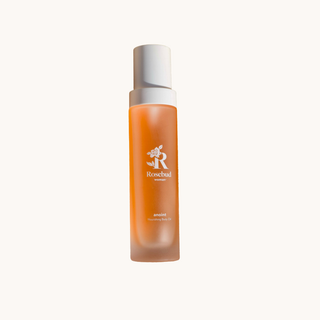
The skin of the belly carries its own record of the months it stretched. Anoint, our nourishing body oil made for scars, stretch marks and skin resilience, is a daily way to tend it as it settles.
Your body built an organ for one purpose and released it when the work was done. That wisdom of making and letting go stays with you.
“The body keeps a record of everyone it has grown.”
Shop what’s in this story
Frequently asked
What does the placenta do?
Is it safe to eat your placenta?
Can I take my placenta home from the hospital?
What is fetal microchimerism?
References
- Placenta: How It Works, What's Normal— Cleveland Clinic
- Male fetal progenitor cells persist in maternal blood for as long as 27 years postpartum (Bianchi et al., 1996)— PNAS via PubMed
- Hawaiian Law Now Permits Parents to Keep Placentas— Women's eNews
- Placentophagy: therapeutic miracle or myth? (Coyle et al., 2015)— Archives of Women's Mental Health
- Late-onset GBS infection in an infant after maternal ingestion of GBS-contaminated placenta capsules— CDC MMWR






Related Articles