The Original Bliss Point: Breast Milk and Foods Engineered for Addiction
A glazed donut holds roughly eleven grams of fat and seventeen grams of carbohydrate, and your brain registers both of them at once. That combination has one source in the natural world. Breast milk.
Howard Moskowitz found the curve. A psychophysicist trained at Harvard, he was hired first by the U.S. Army to fix field rations soldiers kept leaving unfinished, then by Campbell's, General Foods, Kraft and PepsiCo. His method was almost comically simple: give people sugar solutions at eight concentrations, ask how sweet each one tastes and how much they like it, plot the answers. Liking climbs with sweetness, peaks, then falls off. He named the peak the bliss point, that sensory profile where you like a food the most. Product developers asked whether he could do it with several ingredients at once, tuning sugar against salt against fat until the whole formula sat at its peak. He could. Prego and cherry vanilla Dr Pepper came out of that math.
Moskowitz has spent decades pushing back on the word addictive. His position is that the bliss point makes food delicious, full stop. The neuroscience has complicated him a little.
In 2018, a team led by Dana Small at Yale, working with the Max Planck Institute in Cologne, put hungry volunteers in an fMRI scanner and ran an auction. People bid on snacks high in fat, snacks high in carbohydrate, and snacks high in both, all matched for calories, familiarity and liking. They paid more for the combination, and their reward circuitry lit differently for it: dorsal striatum, mediodorsal thalamus, the valuation machinery. Fat and carbohydrate reach the brain by separate signaling routes, and firing both at once produces more reward than either route delivers alone. The researchers called the effect supra-additive.
Then they went looking for where that pairing occurs in nature and came up nearly empty. Fruit brings sugar without much fat. Meat brings fat without much carbohydrate. Nuts and seeds sit on the fat side. A few fruits pair oily seeds with sweet pulp, and those arrive wrapped in so much fiber that the sugar metabolizes slowly. Dairy and grain only entered the human diet around twelve thousand years ago, and the numbers stay modest: oatmeal with milk and honey runs about one gram of fat against twenty-seven of carbohydrate. The donut inverts that ratio and delivers it in four bites.
The one true exception the researchers name is breast milk. Human milk runs about seven percent lactose and four percent fat, sweet and rich arriving together, which is precisely the profile that makes an infant work hard to keep suckling. Survival depends on that. The reward system that makes a newborn stay latched is the same one a food chemist tunes against a spreadsheet.
Name it plainly. The profile is reverse-engineered: food science isolated the two variables that drive reward in the first food a human ever tastes, then rebuilt them shelf-stable at scale. A donut is that reconstruction with everything else left out.
What the reconstruction leaves out
Fat and sugar are the two variables a formula can hold still. Milk holds nothing still.
It arrives as colostrum, thick and gold and closer to an immune transfusion than a meal, then transitions over days into something thinner and whiter. It shifts across a single feed, watery at the start and fattier at the finish. It shifts across the day: milk made at night carries more melatonin than milk made at noon. When mother or infant is fighting an infection, the leukocyte count in milk climbs and falls back down when the illness passes. Roughly two hundred human milk oligosaccharides ride along in it that the infant cannot digest at all. Those sugars are not for the baby. They feed the bacteria colonizing the baby's gut.
And there is the strange, beautiful question of the backwash.
During suckling, some infant saliva flows back up into the nipple and into the ducts, a phenomenon called retrograde duct flow that was caught on ultrasound in 2004. Researchers have wondered for years whether that saliva carries information about the infant's health into the mammary gland, prompting a made-to-order antibody response. A 2022 mouse study gave the idea real experimental support. In humans it remains a hypothesis, which is the honest word for it. What is documented is that infant saliva and milk react on contact, generating antimicrobial compounds neither one produces alone, shaping which organisms take up residence in the newborn's mouth and gut.
Send this one to the people in your life with a baby on the way or a baby at the breast. Send it to the fathers too. A household treats the woman doing the feeding differently once everyone understands that she is running a live immune system out of her own tissue.
Where this lands in your body
Your areola already runs an oil program, and has since menarche. Those small raised bumps ringing the nipple are areolar glands, and they secrete a lipid-rich fluid that keeps the skin supple and carries a scent newborns orient toward with their eyes closed. The equipment was built to lubricate itself through months of a baby's mouth, whether or not it ever fed anyone.
It is also some of the thinnest and most nerve-dense skin on your body, and it takes a beating. Sports bra seams. Cold. Hormonal swings through the month that leave it tender and then tight. Cracking and splitting in the early weeks of nursing. In perimenopause it thins along with every other estrogen-fed tissue, and the nipple can retract slightly, dry out, lose some of its bounce. Body lotion stops at the collarbone. Almost nobody moisturizes here.
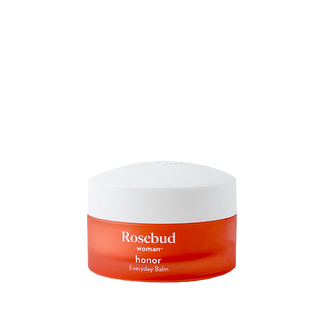
Honor is the balm for it. Women know Honor as vulvar care, and the tissue logic is identical: thin, responsive, hormone-sensitive skin that does better with daily attention than with rescue. Jojoba, evening primrose and meadowfoam seed oils in a beeswax base with chamomile, solid in the jar and turning to oil the second it meets your skin.
Here is the pass, and do it at night when you are out of a bra for eight hours. A fingertip of balm. Circle the areola first, over the little glands, and let the balm find the texture there. Cover the nipple itself, including the tip, which is where the splitting starts. Then the crease underneath the breast where skin sits on skin. Then out along the outer curve toward the armpit. Both sides, every night, for the ninety days a jar lasts, and your hands will know your own tissue better than one annual appointment ever tells you.
Any new lump, dimpling, skin change, inward-turning nipple or unexplained discharge belongs with a clinician, not a bottle of oil. If you are nursing and something hurts, an IBCLC lactation consultant will get you further faster than the internet will.
Sources
- Bliss point / Moskowitz: Retro Report interview transcript; Wikipedia "Bliss point (food)" and "Howard Moskowitz."
- Fat + carbohydrate reward: DiFeliceantonio, Coppin, Rigoux, Edwin Thanarajah, Dagher, Tittgemeyer, Small. "Supra-Additive Effects of Combining Fat and Carbohydrate on Food Reward." Cell Metabolism 28(1), 2018. Donut and oatmeal macro comparison is from the paper itself.
- Milk leukocyte response to infection: Hassiotou et al., Clinical & Translational Immunology 2013; Riskin et al., Pediatric Research 2011.
- Retrograde duct flow: Ramsay, Kent, Owens, Hartmann ultrasound imaging, 2004.
- Backwash and mammary immune response: Ghosh et al., Nature 607, 2022 (mouse model).
- Milk–saliva interaction: Al-Shehri et al., PLOS ONE 2015.
“The reward system that makes a newborn stay latched is the same one a food chemist tunes against a spreadsheet.”
Shop what’s in this story
Frequently asked
What is the bliss point?
Why are foods high in both fat and sugar so rewarding?
Is breast milk the only natural food that combines fat and sugar?
Should I moisturize my nipples and areola?
References
- Supra-Additive Effects of Combining Fat and Carbohydrate on Food Reward— DiFeliceantonio et al., Cell Metabolism (2018)
- Maternal and infant infections stimulate a rapid leukocyte response in breastmilk— Hassiotou et al., Clinical & Translational Immunology (2013)
- Enteric viruses replicate in salivary glands and infect through saliva— Ghosh et al., Nature (2022), mouse model
- Breastmilk-Saliva Interactions Boost Innate Immunity by Regulating the Oral Microbiome in Early Infancy— Al-Shehri et al., PLOS ONE (2015)






Related Articles