Honor and the Biology of Barrier Function
Healthy skin is often described as “well moisturized,” but moisture is only part of the story.
The skin's ability to remain supple, resilient, and comfortable depends less on how much water it contains than on how effectively it prevents water from escaping. That function belongs to the epidermal permeability barrier, a remarkably sophisticated lipid structure that has evolved to regulate hydration, protect against mechanical injury, and defend against environmental exposure.¹
This distinction becomes particularly important in tissues that are naturally thinner and more permeable, including the vulva and perineum. Throughout life—and especially after childbirth, during perimenopause and menopause, or following certain medical therapies—the composition of these protective lipids changes. As estrogen declines, epidermal lipid synthesis slows, barrier recovery becomes less efficient, and transepidermal water loss (TEWL) increases.²–⁴
The result is familiar to many women: persistent dryness, increased friction, greater sensitivity, and tissue that feels less resilient than it once did.
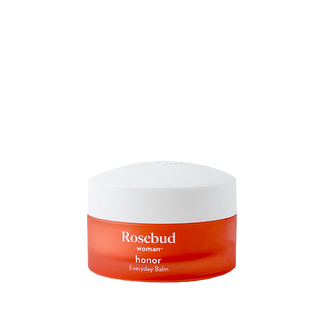
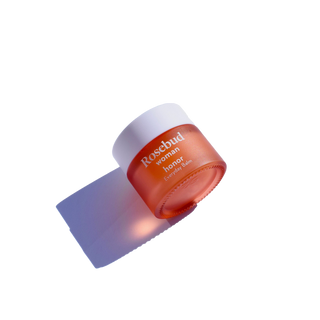
Honor was formulated with this biology in mind.
Rather than functioning primarily as a moisturizer, Honor was designed as a lipid-support balm: an anhydrous formulation intended to reinforce the skin's natural barrier by supplying structurally relevant lipids, protecting against water loss, and reducing friction.
Understanding why requires a closer look at how the barrier itself works.
The Skin Barrier Is Built from Lipids
The outermost layer of skin—the stratum corneum—is frequently described using the “brick-and-mortar” model.
The bricks are flattened cells called corneocytes.
The mortar surrounding them consists primarily of highly organized lipid lamellae composed of three major classes:
- ceramides
- cholesterol
- free fatty acids
These lipids are arranged into multilamellar sheets that create the body's principal permeability barrier. Their organization—not simply their presence—is what prevents excessive water loss while allowing skin to remain flexible.¹ ⁵
When this architecture becomes depleted or disorganized, barrier function declines. Water escapes more rapidly, mechanical irritation increases, and recovery after injury slows.
This process has been documented not only in aging skin but also in estrogen-deficient skin, where reduced epidermal lipid synthesis contributes directly to increased TEWL and delayed barrier repair.²–⁴
Moisture Is Water. Barrier Function Is Lipid Biology.
Many skincare products focus on hydration by adding water or humectants such as glycerin or hyaluronic acid.
Honor takes a different approach. It contains no water and no humectants. Instead, it focuses on preserving the water already present in skin.
This distinction matters because hydration and barrier integrity are not synonymous. A humectant attracts water. An occlusive slows water loss. Barrier lipids restore the architecture that allows hydration to persist.
For compromised tissue, these mechanisms complement one another but are not interchangeable.⁶
Why Honor Is a Balm Instead of an Oil
Honor contains approximately 11% beeswax, making it a true balm rather than a liquid oil. This single design decision changes how the formula behaves.
Most plant oils spread rapidly and gradually absorb into the superficial layers of the stratum corneum. Beeswax forms a persistent semi-occlusive film that remains on the surface considerably longer.
This residence time serves two important functions:
- it reduces transepidermal water loss (TEWL)
- it protects delicate tissue from repetitive mechanical friction
For vulvar tissue—which experiences constant movement, clothing contact, and naturally higher permeability—remaining in place is often more valuable than rapid absorption.
The purpose of the balm is therefore not simply penetration. Its purpose is protection.
Biomimetic Lipids: Why Jojoba Leads the Formula
The largest ingredient in Honor is jojoba. Although commonly described as an oil, jojoba is chemically quite different.
Unlike nearly every botanical oil used in skincare, jojoba consists predominantly of liquid wax esters rather than triglycerides. This distinction is significant because wax esters comprise approximately one quarter of human sebum.⁷
Rather than behaving like a conventional vegetable oil, jojoba closely resembles one of the lipid classes naturally present on healthy skin. Its molecular size also explains why it remains largely within the stratum corneum rather than penetrating deeply.
That is not a limitation. It is precisely where its function is intended.
Because jojoba is also highly resistant to oxidation, it contributes to the long-term stability of the surrounding botanical oils while helping maintain a smooth, flexible surface lipid film.
Linoleic Acid: One of the Most Important Lipids in Healthy Skin
Among all fatty acids present in the epidermis, linoleic acid occupies a uniquely important role. Unlike many fatty acids, linoleic acid is essential—the body cannot synthesize it.
Within skin, linoleic acid is incorporated into specialized acylceramides, particularly ceramide EOS, one of the structural molecules responsible for organizing the lamellar lipid membranes that create an effective permeability barrier.⁸
When epidermal linoleic acid becomes deficient, barrier function deteriorates. Scaling increases, water loss rises, and barrier recovery slows.⁹
Honor contains two exceptionally rich botanical sources of linoleic acid:
- grapeseed oil
- evening primrose oil
Together they provide a substantial reservoir of this essential barrier lipid.
Why Free Fatty Acids Matter
Most botanical oils store fatty acids as triglycerides. Before those fatty acids become available for biological use, they must first be released through enzymatic hydrolysis by naturally occurring skin lipases.
Honor takes an additional step. In addition to triglyceride-rich oils, the formula supplies measured amounts of free linoleic, oleic, palmitic, and stearic acids. These molecules already exist in the form naturally present within healthy epidermal barrier lipids.
By supplying part of this lipid pool directly, Honor complements the skin's own enzymatic processes rather than relying exclusively upon them.
While these fatty acids are present in relatively small quantities, they represent a thoughtful formulation strategy centered on barrier physiology rather than simple emolliency.
Plant Sterols and the Architecture of Barrier Repair
Healthy barrier function depends on more than fatty acids alone. The lamellar membranes of the stratum corneum also require cholesterol.
Honor incorporates phytosteryl glycerides, plant-derived sterol esters whose structure resembles cholesterol sufficiently to support lamellar organization within cosmetic formulations.
Together with linoleic acid and free fatty acids, these ingredients reflect an intentional effort to support multiple components of the skin's natural lipid architecture rather than emphasizing any single ingredient. This approach more closely mirrors the biology of barrier repair itself.
Evening Primrose Oil: More Than Another Botanical Oil
Evening primrose occupies a unique place among plant oils because it contains meaningful amounts of gamma-linolenic acid (GLA) in addition to linoleic acid. GLA is relatively uncommon in nature.
Within the body it can be converted into dihomo-γ-linolenic acid, a precursor involved in the synthesis of series-1 prostaglandins, compounds associated with normal inflammatory regulation.¹⁰
Most published research concerning evening primrose has evaluated oral supplementation, where clinical findings remain mixed. Those data should not be extrapolated to topical products.
Honor includes evening primrose because of its well-established lipid composition and its contribution to barrier support—not because of unsupported claims regarding systemic effects.
Bisabolol: A Well-Studied Soothing Ingredient
Honor contains α-bisabolol, a naturally derived molecule originally identified in chamomile. Among cosmetic ingredients, bisabolol is one of the better characterized small-molecule soothing agents.
Published studies demonstrate reductions in visible redness and irritation, while its relatively small molecular size allows it to interact readily with superficial skin layers.¹¹
Unlike many botanical extracts whose composition varies considerably between suppliers, bisabolol is a chemically defined ingredient with consistent pharmacologic properties.
Why the Formula Contains No Water
Consumers often associate hydration with adding moisture. In reality, skin loses hydration continuously through transepidermal water loss.
Honor addresses that process differently. Because it contains no water, it cannot hydrate by supplying moisture directly. Instead, it slows the escape of water already present within the skin by reinforcing the lipid barrier and providing a persistent occlusive layer.
For this reason, Honor is best applied after bathing or cleansing, when water is already present within the superficial layers of the epidermis. The balm helps retain that hydration rather than replacing it.
What Penetrates—and What Doesn't
Modern skincare often equates penetration with efficacy. Barrier biology is more nuanced.
Many of Honor's largest molecules—including beeswax, jojoba wax esters, and triglycerides—remain largely within the stratum corneum. That is their intended destination. Their role is to strengthen the surface lipid film, reduce evaporation, and protect against friction.
Smaller molecules—including free fatty acids and bisabolol—can move more readily within the upper layers of the epidermis.
The formula therefore combines ingredients that remain at the surface with others that participate more directly in superficial barrier physiology. Protection and penetration are not competing objectives; they are complementary ones.
Consistency Matters More Than Occasional Use
Barrier repair is not instantaneous. The epidermis renews itself continuously, with complete turnover requiring several weeks in healthy adult skin.¹²
Supporting barrier lipids is therefore cumulative rather than immediate. Daily application allows the protective film to remain consistently present while providing repeated exposure to physiologically relevant lipids.
Like the barrier itself, the benefits are built gradually through regular use.
What Honor Is Designed to Do
Honor was formulated to:
- reduce transepidermal water loss through persistent occlusion
- protect delicate tissue from mechanical friction
- replenish the skin with physiologically relevant lipid components
- provide abundant linoleic acid as a precursor for healthy barrier lipids
- support skin comfort with well-characterized soothing ingredients such as bisabolol
Just as importantly, Honor is not intended to function as a drug or hormone therapy. It does not replace estrogen. It does not alter endocrine physiology. Instead, it supports one of the downstream consequences of estrogen decline: reduced barrier lipid production.
That distinction reflects both the science and the purpose of the formulation.
An Ingredient Philosophy Grounded in Skin Biology
Many skincare products tell consumers that they contain botanical oils because botanicals sound appealing. Honor begins with a different question:
Which lipids does healthy skin actually use?
The answer is remarkably consistent across decades of dermatologic research. Healthy barrier function depends upon an organized matrix of fatty acids, cholesterol, and ceramides working together to regulate water loss and protect underlying tissue.
Honor was formulated to support that architecture. Rather than overwhelming the skin with dozens of fashionable ingredients, it focuses on lipids whose biological roles are well understood and whose functions correspond to the physiology of the barrier itself.
In that sense, Honor is less a moisturizer than a barrier-support system—one designed around what healthy skin is built from, and what vulnerable skin often needs most.
References
- Elias PM. Stratum Corneum Defensive Functions: An Integrated View. Journal of Investigative Dermatology. 2005.
- Brincat M, et al. Skin Changes and the Menopause. Climacteric. 2005.
- Stevenson S, Thornton J. Effect of Estrogen on Skin Aging and Barrier Function. Experimental Dermatology. 2007.
- Hall G, Phillips TJ. Estrogen and Skin: The Effects of Hormone Deficiency on Barrier Homeostasis. Journal of the American Academy of Dermatology.
- Madison KC. Barrier Function of the Skin: “La Raison d'Être” of the Epidermis. Journal of Investigative Dermatology.
- Proksch E, Brandner JM, Jensen JM. The Skin: An Indispensable Barrier. Experimental Dermatology. 2008.
- Wertz PW. Lipids and the Permeability and Antimicrobial Barriers of the Skin. Journal of Lipids. 2018.
- Holleran WM, Takagi Y, Uchida Y. Epidermal Sphingolipids and Ceramide Biology. Biochimica et Biophysica Acta.
- Elias PM, Feingold KR. Skin Barrier. CRC Press.
- Fan YY, Chapkin RS. Importance of Dietary γ-Linolenic Acid in Human Health and Nutrition. Journal of Nutrition.
- Kamatou GPP, et al. Bisabolol: A Review of Biological Activities and Cosmetic Applications. Molecules.
- Rawlings AV, Harding CR. Moisturization and Skin Barrier Function. Dermatologic Therapy.
“Honor is less a moisturizer than a barrier-support system — designed around what healthy skin is built from, and what vulnerable skin often needs most.”
Shop what’s in this story
Frequently asked
Is Honor a moisturizer?
Why does Honor contain no water?
When and how should I apply Honor?
Does Honor replace vaginal estrogen?






Related Articles