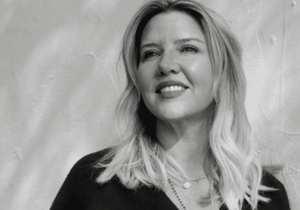
The Beauty in Menopause from our Healthcare Partner, Dr. Heather Hirsch
Content from Dr. Heather Hirsch
Today, we’re talking about what is beautiful about midlife and menopause? I think this is such a great topic. A lot of times when I’m being interviewed, people will ask me what are the most common symptoms and what are the things that you hear the most? And every once in a while, someone asks me, what are the benefits? What are the good things? What’s the awesome thing about being in menopause? So I thought, why don’t we flip the script this week and talk about the things that are beautiful about midlife and menopause? So that’s what we’re gonna get into today.
If you have ever seen me in the office, one of the things that I love to do is learn about my patients’ lives. In fact, when I teach my students, one of the things I think is so important is what we call your social history, which is, are you working? Are you at home? Did you previously work? Did you retire? What’s your family structure like? What is your support system like? What is your sleep like? Those things are so important in your health. And so they’re really important for me to know. And so often when I start asking you those questions, it always just triggers an interest in your life, what you may have done before, or what you did before you were married or what your hopes and dreams are. And I say this with 100% certainty, that women in midlife, which is when menopause hits for most women, are the most forceful and impactful sector of the globe, because let’s face it, women really run the world whether it’s seen that way or it’s hidden, women make the decisions in their household, usually, women actually often even help make the financial decisions, if they’re not the ones that actually signing the check, but they certainly have a opinion on where finances go, or if you’re lucky enough to have philanthropy, women will make these decisions.
Women make decisions. And if you’re in the corporate world, not that one is better than the other for being a home or being in the corporate world or having a business, being a small business owner, you are at the peak of your career. You have worked decades to get to where you are. And women tend to have really strong emotional intelligence skills, social skills, language and communication skills. They’ve often diversified throughout there decades climbing to the top of the ladder, and so you are the most important facet of the world at this point, women between ages 45 to 65, as just an average. Not to say that you couldn’t be 30 years old and run the world, not to say you couldn’t be 70 year olds and run the world, not to say you couldn’t be 45 and run your household. And so women are the most useful sector, I think, at this time, in their lives. And that is really exciting, and yes, it tends to happen on average when menopause happens. we know that the majority of women are symptomatic.
So I always say 70 to 80% of women are symptomatic, but with that outstanding, or if you ignore that for now, this is the time in a woman’s life where she can make the biggest impact on her family, on the community, at her business, in even larger than that, which is another reason why I love it, taking care of women in midlife and menopause, because when they get their thrive back or their groove back, and again, I say this from a perspective of usually women come to me with symptoms, and usually they’re pretty bad by the time they come to see me, but to see someone regain their ability to thrive like no other is just the most satisfying and rewarding thing that I could ever imagine. Now, if you know anything about my story, I started an OB/GYN. So I started my training in 2010, and I always want to be a part of women’s lives. So I thought, well, I have to go into OB/GYN ’cause how else can you take care of women? Spoiler alert, there’s many other ways. And I loved being there when women delivered babies. Who wouldn’t? You’d have to be totally crazy or, to not think that it’s just the most beautiful in a woman’s life. But what I realized is there is a point that’s even more amazing, which is watching women really step into their own, which is at midlife and at menopause. And I am so honored and lucky that I get to see so many of you.
So I know many of my listeners are my patients. And in so many of you that I don’t know, I’m sure this is happening or you could also see how this could happen, but to watch someone come back and say, I am thriving again, I am living my fullest life, you’ve really helped me through this hump where now I get to be the person that I’ve envisioned for the last several decades. It is literally the coolest thing you’ve ever seen. And it’s so inspiring. I learned so much, not only from I always say my students, but from you, for my patients. Just to watch people really, really come into their own, it is absolutely beautiful. So this is the decade, and this is this X where women run the world, and it is absolutely wonderful to see. Now, the other thing about being beautiful at menopause is you get the opportunity to bring the focus back to you. For many decades of our lives, we are taking care of other people, and arguably, you’re still taking care of many other people. Now you’re taking care of parents perhaps, and you’re taking care of teenagers or you’re taking care of the neighborhood at this point, or you’re taking care of your entire church.
Whatever it may be, women certainly tend to be caregivers, but one of the things that’s beautiful about menopause, or perhaps a takeaway for someone who’s symptomatic is that you get to put the focus back on you. In some ways, for many of you, you have to, you don’t feel well, you’re not sleeping anymore and you’d get to the point where you say, I really need help but I really need to focus. I really need to prioritize me because I can tell if I’m going downhill, the whole rest of the community and family is going downhill with me. So you get to put the focus back on you. And that is beautiful. And if you can see it that way instead of saying I’m a burden, or I can’t take my mom to so-and-so ’cause I need to see the doctor, if you can see it as this opportunity, to really, really use that time to focus back on you, it is beautiful. And we all heard the saying of the plane’s going down and you’ve gotta grab your oxygen mask first or you can’t help anyone else. And this is really true. And for many of us, it hits when it really hits, when we’re not sleeping, we’ve only slept two hours, we can’t get through the day, we can’t think, our marriage is starting to unravel because we don’t feel great or our relationships are starting to unravel because we don’t feel great. We hit that point where we’re like, I need help. And you have to focus back on you. And it’s a really nice opportunity to really get to do that and to practice it because we say that all the time but it is those moments like postpartum or midlife and menopause where you have to focus back on you or you clearly see the writing on the wall that you’re not gonna be able to take care of those around you. So you get to put the focus back on you. You really can ask yourself, what do I now need? And that’s what I love about when I get to see patients in clinic is we really get to focus on what exactly do you need at this time? And then of course we do all the other science-y stuff. We talk about options. We talk about risks and benefits, and you’ve heard me talk about those things a lot, and I’ve got lots and lots of episodes on safety of medications and hormone therapy and all of those things.
But a lot of times when I’m taking that social history and I’m learning about your support system and I’m learning about your goals and the aspirations or what your kids are doing or what your grandkids are doing, I really wanna know what you do you need at this moment. Is it support? Is it sleep? Is it the use of medications when it’s medically necessary? Is it to find a hobby again? Is it to find your vision for who you are again? Because a lot of time, we spend decades taking care of other people, we really forget who we really are at the core, what really makes us happy at the core. If you feel like I am speaking to you and you think that you’re the only one out there like this, no, no, no, this is really, really, really common, and finding yourself again and even finding the things you loved about your partner again, the things you loved about the community that you live in again, these are all things that we need to do or you might need to do at midlife and in menopause. The other really beautiful thing is that you you have now a chunk of experience as your guide.
We talk about wisdom, and I guess I wanna tread lightly, I don’t know if I have the wisdom yet to talk about wisdom Maybe soon, maybe in another couple years, but certainly you have a file cabinet of past experiences that you can use. And it doesn’t matter if those past experiences went well or this past experiences went poorly, you have that. And it’s a gold mine. Again, I talk a lot about how, and for example, last week we talked about pregnancy and menopause and how pregnancy can be a little window into how you do or how your body is under a stressor, especially a hormonal stressor, but tons of your past experiences can remind you how you’ve done in a stressors at work, stressors within your family, stressors in your interpersonal relationships, and using those as a guide or as a resources for how your behavior was in the past can really be useful as you go forward. Again, Nelson Mandela said, you’re either right or you learn, instead of right or wrong. And I love this saying, I say it all the time because it really can help us have a growth mindset, which I think is really helpful in midlife because so many of us can really get down on ourselves or really the media can tell us we’re not eating the right thing, we’re not exercising, we’re not meditating, we’re not doing all of these things, and use your past experiences as a guide.
How did you do when you started a certain medication? How did you do when you are asked to journal your symptoms or your food before? What were the barriers to doing that before? What could you learn from the experience if it didn’t go well? If it did go well, wonderful. A clear example of this is if I’m gonna start an SSRI, or if I’m gonna start a birth control pill and someone says, you know, gosh, when I was 20 or 30, I took this and I did really well. Well, let’s use that. As simple as that sounds, if your body did well on that, let’s not reinvent the wheel. You already went through an experience where you tried a medication, and I’m just using this as an example. So let’s try that one again and see how you do. So you’ve got all these past experiences that you can use as a guide. Next, I think if you want to go here, you can really try to establish a deeper connection with your femininity during midlife and in menopause. And do you might think like, no I feel totally unfeminine. I’ve got the menopause belly, I’m losing my hair, my nails are brittle, sex is painful, like, what are you talking about? Well, stick with me here. One of the things that I try to encourage my patients to do is to journal and track and really sort of feel your symptoms or really kind of get in tune with them. When do you have hot flashes? What triggers them? How long does the vaginal tissue hurt or burn after intercourse, if you’re having intercourse? Et cetera. And the good news, I always say to my patients, the good news about coming to see me or coming to see another menopause doctor is that very often, it’s not rocket science, and we can really improve you. And if you’re really in tune with your body that you notice these changes and these improvements, they’re fascinating to see. Not only do I get to see you thrive again in your job, but I get to see you thrive in your self love. It’s amazing.
I tell everyone, my students in particular, that I just have the best job ever, because I really get to see women step into feeling that they’re back in their best body. And again, the really cool thing is it’s not really rocket science, or it’s not really that hard to get you from point A to B, B being, I feel amazing, or I feel like my old self. Again, it’s not that hard. It’s the conversations in between. It’s the walking through the myths and misconceptions. It’s the walking through the fears. It’s the letting yourself take priority, it’s the letting yourself sit in my office for an hour, it’s the letting yourself eat. That’s actually the hard part. I think that’s where the skill of being a menopause or a women’s health physician or an internist or an OB/GYN, I think that’s where the skill actually comes in, is discussing and talking you through these things. It’s really not the prescribing of medications. There’s only a few, and you can listen to all my podcasts on YouTube and you can know them, but it’s really the part where you allow yourself to get better. You allow yourself that freedom, you allow yourself that you’ve done everything you can, it is a physiological process. There’s beauty in that. And so I think if possible, this is a time where you can really form a deeper connection with your femininity.
So we’re talking about establishing a deeper connection to your femininity. And within that, I think there’s also this ability to use this time to look back and thank your body for all it’s accomplished. Now, this is not easy As someone who, again, is pregnant and your body really changes, that’s a struggle for me. Some women love pregnancy, and I think this is so fascinating. Again, just the hormones and how you feel and how your body shifts. I do not I feel kind of physically limited, I’m short, I’m five, zero, full disclosure, and so there’s not a ton of room, and it is really hard for me to say, thank you body. Thank you. I know it intellectually, but it’s still hard to thank my body for that. Your breasts change, your sexual health changes, things change, and you’re doing it all for other people, right? That we’re like literally made for that. And if you haven’t had a baby, your body may have also changed or felt like it’s deceived you.
Perhaps you’ve had endometriosis, painful periods, PMS, perhaps you’ve had infertility and you’ve been struggling with your body, like not doing what it was supposed to do. All of these things. I’m sure I’ve missing a bunch of things like PCLS or other hormonal disorders or just other medical conditions. Perhaps you were born with a congenital disability or congenital a genetic thing that you cannot change. There’s lots of things, but to be able to sort of think your body at this point for all that it has accomplished for you for all that it has done for you and for all that it’s gonna continue to do for you. This could be a time where you may be able to find some peace with that. And the next thing that I think about in terms of what’s beautiful about menopause is something that I get to see a lot, especially through my social media, is that if you have had a story and you’ve come out better, or perhaps you’re in the middle of your story but you are gonna come out better, you can use it to message the world to inspire others. Your story’s really powerful, because we are, I think in a shift where menopause has gone from kind of obscure and still kind of taboo to something that people are more willing to talk about, are more willing to share their success stories, whether it’s in a Facebook group or Instagram, because we want other women to succeed.
We want other women to feel better. I love this ’cause I see it all the time. People are constantly saying, here’s a recommendation for this or follow this doctor or follow this specialist or follow this fitness expert in midlife health. I love watching women share what worked for them. And with the caveat, I always say that what for one person definitely may not work for you, but it’s still so cool, it’s still so inspiring for you to sort of share your message of I followed this person and they really helped me, or I went to this doctor and it really helped me, or you try this website again, menopause.org, that’s the best one, or ISSWSH, the International Society for the Study of Women’s Sexual Health, also now has a directory where you can find an ISSWSH, I guess, certified doctor or someone who’s involved in that community.
So I love watching women that really help each other, and really using your story to help and inspire others. And so I think just the most beautiful thing is that we as women, and again, yeah, I’m sort of projecting and I’m sort of certainly making assumptions that it can be hard for women to find a voice or it can take some time to find the voice, but this is where you get to find your voice. This is where you get to find your voice, if you haven’t yet. And I feel like that saying that statement of finding your voice or knowing yourself for loving yourself, it’s a constantly evolving journey. I do not think it actually stops in midlife and at menopause. It probably continues way, way, way on, but it’s certainly a stopping point of like, you get to find your way voice and you get to tell your story, and you get to listen to your body, and you get to learn from your past experiences. And you now get to focus back on yourself, and these are all the things, to me, that are beautiful about menopause and mid-life and women’s health and being able to sit and watch and see people blossom and see people thrive. It is many ways more beautiful than watching someone deliver a baby, because it is something that is physiologic and psychologic and years of training to do, and it’s beautiful to watch.
Read more on Dr. Heather Hirsch.
“This is where you get to find your voice.”
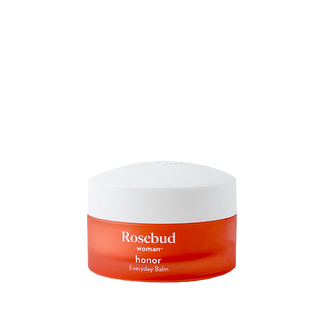
Shop what’s in this story
Frequently asked
What is beautiful about menopause?
How do I find a menopause specialist?
References
- The Beauty in Menopause— Dr. Heather Hirsch






Related Articles